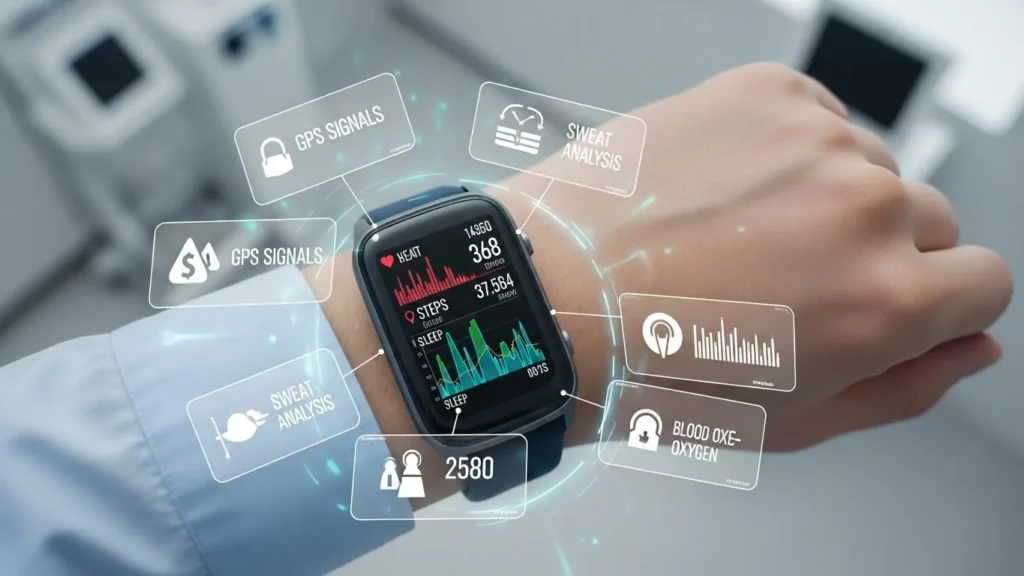
The small device that feels harmless
You strap it on in the morning.
It counts steps.
Tracks sleep.
Buzzes with reminders.
It feels helpful. Even motivating.
But wearables—fitness bands, smartwatches, health rings—aren’t just tracking movement. They’re quietly building one of the most intimate data profiles you’ve ever created.
Not because they’re designed to spy.
But because the human body is an incredibly rich source of data.
And wearables sit directly on it.
Why Wearable Devices Are Data Goldmines
Wearables were built to solve a problem:
- People wanted real-time health feedback
- Doctors wanted better longitudinal data
- Users wanted motivation and accountability
To do that, devices must measure constantly.
That constant measurement produces:
- Continuous biological signals
- Behavioral patterns
- Emotional and lifestyle inferences
Unlike phones, wearables don’t sit in your pocket.
They sit on your skin.
1. Heart Rate Is Only the Beginning
Most people think wearables track:
- Steps
- Calories
- Heart rate
In reality, heart rate data allows systems to infer:
- Stress levels
- Emotional arousal
- Recovery patterns
- Fitness efficiency
When heart rate is paired with:
- Time of day
- Location context
- Activity type
It becomes a biological diary, not just a metric.
2. Sleep Tracking Reveals More Than Rest
Sleep data sounds benign.
But modern wearables track:
- Sleep stages
- Movement during sleep
- Wake times
- Irregular patterns
Over time, this reveals:
- Work stress
- Lifestyle habits
- Shift schedules
- Even mental load patterns
Sleep is one of the most personal behaviors humans have.
Wearables observe it nightly.
3. Movement Patterns Map Your Daily Life
Accelerometers and gyroscopes don’t just count steps.
They detect:
- Walking vs running
- Sitting vs standing
- Driving vs cycling
- Micro-movements
From this, systems infer:
- Commutes
- Work routines
- Sedentary habits
- Energy expenditure trends
Movement data becomes predictability data.
4. Location Isn’t Always GPS — But It’s Still There
Even when GPS is limited, wearables can infer location via:
- Paired phone data
- Wi-Fi proximity
- Bluetooth signals
- Routine timing
If you:
- Exercise at the same park
- Walk at consistent hours
- Sleep in one place regularly
Location emerges through patterns.
No map required.
5. Health Metrics Extend Beyond Fitness
Many wearables now track:
- Blood oxygen levels
- Skin temperature changes
- Heart rate variability (HRV)
- Respiratory rate
Individually, these are useful.
Combined, they can signal:
- Illness onset
- Fatigue trends
- Recovery quality
This is powerful—and sensitive—information.
That’s why wearable data is treated differently than typical app data.
6. Data Doesn’t Stay on the Device
Wearables sync.
Often automatically.
That means data moves:
- From device to phone
- From phone to cloud
- From cloud to analytics systems
Cloud storage enables:
- Long-term trend analysis
- AI-driven insights
- Cross-device continuity
But it also expands:
- Exposure surface
- Retention timelines
- Potential third-party access
7. “Anonymized” Doesn’t Mean Unidentifiable
Wearable companies often say data is anonymized.
That usually means:
- Names removed
- IDs replaced
But biometric patterns are unique.
- Identity can be inferred
- Profiles can be re-linked
Behavioral data doesn’t need a name to be recognizable.
8. Ecosystems Multiply Data Reach
Wearables rarely operate alone.
They integrate with:
- Fitness apps
- Health platforms
- Nutrition trackers
- Insurance wellness programs
Each integration expands:
- Who can access insights
- How long data persists
- What inferences are possible
Convenience creates data gravity.
9. Insurance & Workplace Programs Add Pressure
Some programs offer:
- Discounts
- Rewards
- Incentives
In exchange for wearable data.
Participation is often “voluntary.”
But incentives create subtle pressure.
Over time, this normalizes:
- Continuous monitoring
- Performance comparisons
- Health-based segmentation
The line between wellness and surveillance can blur.
10. Updates Can Expand What’s Collected
Wearables evolve rapidly.
Software updates may:
- Activate new sensors
- Enable deeper analytics
- Expand health features
What your device collects today may differ from what it collects six months from now.
And most users never revisit settings.
11. The Body Is the Final Data Frontier
Your browsing habits can change.
Your body data?
- Is constant
- Is involuntary
- Is deeply personal
That’s why wearable data is so valuable—and so sensitive.
It reveals how you live, not just what you click.
Wearables vs Smartphones: A Clear Comparison
| Aspect | Wearables | Smartphones |
|---|---|---|
| Data Type | Biological + behavioral | Behavioral + contextual |
| Collection Frequency | Continuous | Intermittent |
| User Awareness | Low | Moderate |
| Sensitivity Level | Very high | High |
| Inference Power | Deep | Broad |
Wearables collect less variety, but more intimacy.
Why This Matters Today (Without Alarm)
Wearables are becoming:
- Medical-grade
- Insurance-linked
- Workplace-integrated
- AI-driven
That makes their data more influential—not just informative.
The goal isn’t fear.
It’s informed use.
Common Mistakes Users Make
- Assuming fitness data isn’t “real” data
- Never reviewing privacy dashboards
- Connecting apps without auditing permissions
- Leaving cloud sync on forever
- Believing deletion is immediate
These are normal behaviors—not careless ones.
What You Can Do (That Actually Helps)
You don’t need to stop using wearables.
Just use them consciously.
Practical steps:
- Review health data permissions quarterly
- Disable metrics you don’t use
- Limit third-party integrations
- Check data retention settings
- Use local-only features when available
Platforms from companies like Apple, Google, Fitbit, and Samsung provide privacy controls—but they require user action.
A Hidden Tip Most People Miss
If a wearable feature feels interesting—but not essential:
- Try disabling it
- See if the device still meets your needs
Most people discover they don’t need half the data being collected.
Why Awareness Beats Avoidance
Wearables aren’t villains.
They:
- Improve health awareness
- Encourage movement
- Help detect trends
The problem isn’t collection.
It’s unexamined collection.
When users understand what’s gathered, technology works better—for everyone.
Key Takeaways
- Wearables collect deeply personal biological data
- Inferences go far beyond steps and calories
- Data often leaves the device and persists
- Ecosystems multiply exposure
- Small settings changes restore meaningful control
Frequently Asked Questions
Is wearable health data protected?
Often more than regular app data—but protections vary by platform and region.
Can wearable data be shared with third parties?
Yes, depending on settings, integrations, and programs you opt into.
Does disabling GPS stop tracking?
It limits location accuracy, but routines can still be inferred.
Are older wearables safer?
Not always. Older devices may lack updated privacy controls.
Should I stop using wearables?
No. Use them intentionally, not automatically.
A Calm, Honest Conclusion
Wearable devices don’t just track fitness.
They observe life—quietly, continuously, and intimately.
That power can help you
or quietly profile you.
The difference isn’t the device.
It’s awareness.
When you understand what your wearable knows,
you get to decide what it’s really for.
Disclaimer: This article is for general educational awareness and reflects common wearable device features and data practices that may vary by brand, model, and user settings.

Natalia Lewandowska is a cybersecurity specialist who analyzes real-world cyber attacks, data breaches, and digital security failures. She explains complex threats in clear, practical language so everyday users can understand what really happened—and why it matters.