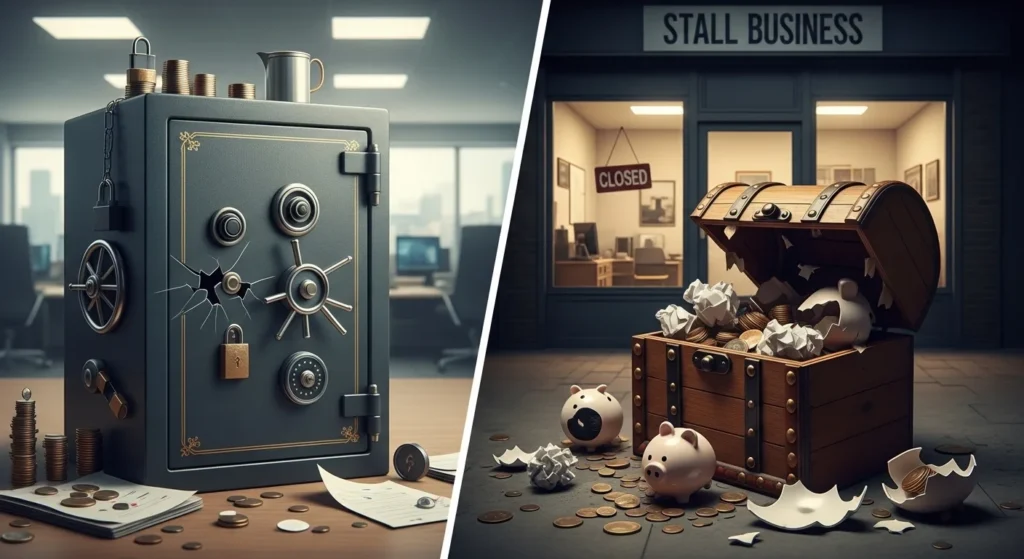
When a Breach Isn’t Just a Setback
When a large company suffers a breach, it’s news.
When a small business suffers one, it’s often the beginning of the end.
Not because the attack was bigger.
Not because the data was more valuable.
But because small businesses absorb damage very differently.
A single breach can erase years of trust, strain cash flow overnight, and push already-stretched teams past the breaking point.
This isn’t about fear.
It’s about understanding why the same incident creates radically different outcomes—and what small businesses can do to change that trajectory.
The Myth: “Hackers Only Go After Big Companies”
Many small business owners believe they’re too small to matter.
That assumption is costly.
Attackers don’t target based on brand prestige.
They target based on ease and opportunity.
Small businesses often have:
- Fewer security controls
- Limited monitoring
- Shared credentials
- Outdated systems
This makes them attractive—not insignificant.
And once attacked, the damage spreads faster because there’s less buffer to absorb it.
Why Small Businesses Have Less Room for Error
Large enterprises can absorb losses.
Small businesses can’t.
When a breach hits, small organizations face immediate pressure on:
- Cash flow
- Operations
- Customer relationships
- Staff capacity
There’s no separate crisis team.
No spare budget.
No redundancy.
Every problem lands on the same people already running the business.
That compression of responsibility magnifies impact.
The Cash Flow Shock That Comes First
For small businesses, financial impact isn’t theoretical.
It’s immediate.
Common costs include:
- Emergency IT support
- System restoration
- Legal consultations
- Customer notifications
At the same time, revenue often drops due to downtime or lost trust.
Bills still arrive.
Payroll still runs.
Cash flow pressure becomes the first existential threat—often before recovery even begins.
Trust Loss Hurts Smaller Brands More
Trust works differently for small businesses.
Customers don’t see them as faceless corporations.
They see:
- Personal relationships
- Familiar names
- Local reputations
A breach feels personal.
Customers may forgive a global brand.
They’re far less forgiving when the breach comes from a business they trusted directly.
Once lost, that trust is extremely hard to rebuild at a small scale.
Real-World Patterns Behind Small Business Failures
Industry studies consistently show that a significant percentage of small businesses close within months after a major cyber incident.
Not because the breach destroyed systems.
But because it triggered:
- Customer churn
- Financial strain
- Operational burnout
- Loss of confidence
Recovery requires energy, capital, and time—three things small businesses rarely have in excess.
Why Downtime Is More Devastating for Small Businesses
Large companies can reroute work.
Small businesses often can’t.
When systems go offline:
- Orders stop
- Payments fail
- Customer service stalls
- Productivity collapses
Even short outages can erase weeks of progress.
For service-based businesses, downtime often means no income at all.
The clock moves faster when margins are thin.
Limited Insurance and Support Create Bigger Gaps
Many small businesses have some form of cyber insurance.
Few have enough.
Policies may not cover:
- Full business interruption
- Reputational damage
- Long-term customer loss
- Operational restructuring
Insurance helps with immediate bills.
It doesn’t rebuild momentum.
That gap leaves owners personally carrying the long-term burden.
Comparison Table: Breach Impact on Small vs Large Businesses
| Area | Small Businesses | Large Businesses |
|---|---|---|
| Financial Buffer | Very limited | Substantial |
| Downtime Tolerance | Low | Moderate to high |
| Customer Trust | Personal and fragile | Distributed |
| Recovery Resources | Minimal | Dedicated teams |
| Long-Term Survival | At risk | Likely |
The breach may be similar.
The outcome rarely is.
Why Employees Feel the Impact More in Small Teams
In small businesses, people wear many hats.
After a breach, those hats multiply.
Employees face:
- Longer hours
- Higher stress
- Confusion and uncertainty
- Pressure from customers
There’s little room to redistribute workload.
Burnout becomes a real risk—and losing even one key employee can stall recovery entirely.
Hidden Cost: The Owner’s Mental Load
This cost rarely gets discussed.
But it matters.
Owners often carry:
- Responsibility for the breach
- Fear of business failure
- Stress over customer reactions
- Decision fatigue
That mental load affects judgment, communication, and leadership.
Recovery isn’t just technical—it’s emotional.
And emotional exhaustion slows everything else.
Common Mistakes That Make Losses Worse
Many small businesses unintentionally increase damage by:
- Delaying response
- Hiding the incident
- Under-communicating with customers
- Trying to fix everything alone
- Waiting too long to seek help
These mistakes are understandable.
But they compound losses quickly.
Why This Matters Today (And Going Forward)
Small businesses are more digitally dependent than ever.
Online payments.
Cloud tools.
Customer data systems.
This dependence increases exposure—but also opportunity.
Those who understand their risk can prepare smarter, not just spend more.
The goal isn’t perfection.
It’s survival and continuity.
Actionable Steps to Reduce Breach Impact
Small businesses don’t need enterprise-level security to improve resilience.
Practical steps include:
- Back up critical data regularly and offline
- Limit access to only what employees need
- Use multi-factor authentication everywhere possible
- Create a simple incident response plan
- Communicate clearly and early if something happens
Preparation doesn’t stop breaches.
It reduces how much they take.
Hidden Tip: Simplicity Is a Strength
Complex systems fail silently.
Simple systems fail visibly—and are easier to fix.
Small businesses that prioritize:
- Fewer tools
- Clear processes
- Strong basics
Often recover faster than those chasing advanced solutions.
Security maturity matters more than sophistication.
Key Takeaways
- Small businesses lose more because they have less buffer
- Trust loss hits smaller brands harder
- Downtime quickly becomes existential
- People, not systems, bear most of the damage
- Preparation changes outcomes dramatically
Understanding this shifts security from fear to strategy.
Frequently Asked Questions
Why are small businesses targeted so often?
Because attackers look for weak defenses, not famous names.
Can a small business recover fully after a breach?
Yes—but recovery depends heavily on preparation, communication, and speed.
Is cyber insurance enough protection?
It helps with costs but doesn’t replace trust or customers.
What’s the biggest mistake small businesses make?
Assuming a breach won’t happen to them.
What’s the most effective first step?
Securing access controls and backups before anything else.
Conclusion: The Difference Between Survival and Shutdown
A cyber breach doesn’t have to end a small business.
But ignoring the unique way damage spreads through smaller organizations often does.
Small businesses lose more after breaches not because they’re weaker—but because every loss hits closer to the core.
Those who understand this don’t wait for perfection.
They prepare for impact—and protect what matters most.
Disclaimer: This article is for general informational purposes and reflects common business experiences, not guidance for any specific organization.

Natalia Lewandowska is a cybersecurity specialist who analyzes real-world cyber attacks, data breaches, and digital security failures. She explains complex threats in clear, practical language so everyday users can understand what really happened—and why it matters.
Pingback: How Much a Cyber Attack Really Costs a Business (The Price No One Talks About)
Pingback: How Cybercrime Quietly Disrupts Cash Flow—and Why the Damage Lasts Longer Than You Think