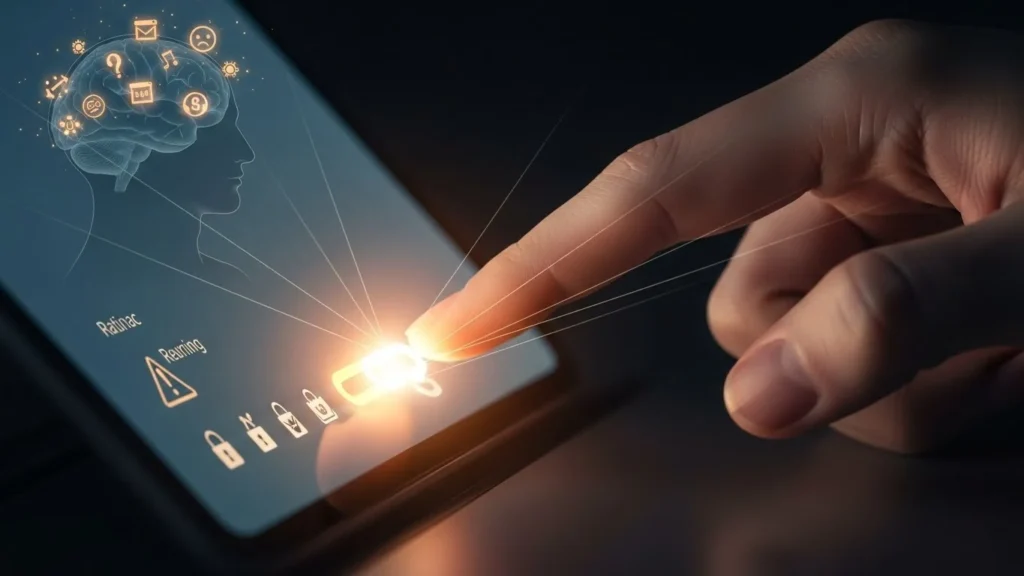
“I Knew I Shouldn’t Have Clicked”
Almost everyone has said this at least once.
You notice the warning signs:
- The message feels slightly off
- The link looks unfamiliar
- Your instincts hesitate
And yet—click.
Nothing explodes.
No alarms go off.
Sometimes nothing happens at all.
Which makes the question even more interesting:
👉 Why do people click links they already suspect might be risky?
The answer has very little to do with intelligence, awareness, or carelessness—and everything to do with how the human brain makes decisions under everyday pressure.
Why This Isn’t a “Stupidity” Problem
It’s tempting to think risky clicks happen because people “don’t know better.”
But research and real-world data show the opposite.
Many victims of phishing and malicious links:
- Are well-educated
- Understand basic online safety
- Have seen warnings before
- Recognize common scam signs
Yet they still click.
That’s because risky clicks are rarely logical decisions.
They are emotional micro-decisions, made in seconds, often without conscious thought.
Understanding that changes how we protect ourselves.
The Brain’s Two-Speed Decision System
Human thinking operates on two levels:
- Fast, automatic thinking (intuitive, emotional, reactive)
- Slow, deliberate thinking (analytical, careful, rational)
Risky links are designed to engage the fast system.
By the time logic catches up, the click has already happened.
This isn’t a flaw.
It’s how humans evolved to function efficiently.
Online environments simply exploit that efficiency.
Reason #1: Curiosity Is Stronger Than Caution
Curiosity is one of the most powerful motivators in human behavior.
When a message hints at:
- Something unknown
- Something personal
- Something incomplete
The brain experiences cognitive tension.
It wants resolution.
Examples:
- “Is this about me?”
- “What if this is important?”
- “Just let me check quickly…”
That urge to know often overrides vague risk awareness.
Curiosity doesn’t feel reckless.
It feels reasonable.
Reason #2: Emotional Timing Weakens Judgment
Most risky clicks don’t happen when people are calm and focused.
They happen when people are:
- Busy
- Tired
- Stressed
- Distracted
- Multitasking
In these moments, the brain prioritizes speed over scrutiny.
A link that might be ignored at noon feels harder to resist at 11:30 p.m.
The risk didn’t change.
The mental bandwidth did.
Reason #3: Familiarity Creates False Safety
When something looks familiar, the brain lowers its guard.
This includes:
- Brand logos
- Writing style
- Email layouts
- App-like interfaces
Familiarity signals safety—even when no verification exists.
That’s why many risky links mimic:
- Common services
- Workplace tools
- Delivery notifications
- Password alerts
The brain says, “I deal with this all the time.”
And skips deeper checking.
Reason #4: “I’ll Know If It’s Dangerous”
A subtle but common belief is:
“I’ll click, but I won’t fall for it.”
People assume danger only exists after the click—when asked for data or money.
But many harmful actions occur silently:
- Tracking
- Session hijacking
- Credential capture
- Malware execution
The belief that “nothing bad happens unless I type something” creates a false sense of control.
Reason #5: Micro-Urgency Blocks Reflection
Risky links often include soft urgency—not panic, but pressure.
Phrases like:
- “Please review”
- “Action required”
- “Just confirming”
- “Unusual activity”
These don’t feel threatening.
They feel responsible.
Urgency nudges the brain into completion mode—finish the task, clear the notification, move on.
The goal isn’t fear.
It’s momentum.
How Risky Links Are Designed to Win
Here’s how psychological intent differs from surface appearance:
| What the Link Appears to Do | What It’s Designed to Trigger |
|---|---|
| Share information | Curiosity |
| Request confirmation | Responsibility |
| Flag an issue | Mild anxiety |
| Look familiar | Automatic trust |
| Feel routine | Reduced scrutiny |
The link doesn’t need to convince you it’s safe.
It only needs to get clicked once.
Why Warnings Alone Don’t Work
Many platforms display:
- “This link may be unsafe”
- “External site”
- “Proceed with caution”
Yet people still continue.
Why?
Because warnings often appear after emotional engagement has already begun.
Once curiosity or urgency is activated, logic has to fight uphill.
That’s why education alone isn’t enough—habits matter more.
Common Mistakes That Increase Risk
People often increase their exposure without realizing it:
- Clicking links directly from messages
- Checking emails while distracted
- Treating personal devices as “safe”
- Trusting design over source
- Rushing to clear notifications
These aren’t bad behaviors.
They’re normal behaviors.
Which is exactly why they’re targeted.
Simple Habits That Break the Click Reflex
The goal isn’t paranoia.
It’s interruption.
Try these practical shifts:
- Delay the click
Even a 5-second pause reduces impulsive behavior. - Hover or long-press first
See where links actually lead. - Navigate manually
Open a new tab instead of clicking. - Ask one question
“Why is this asking me to act?” - Separate reading from action
Read messages now—act later.
These habits slow the fast brain just enough for logic to step in.
Why This Matters Today (And Always Will)
Digital life rewards speed.
Notifications pile up.
Messages demand attention.
Everything wants a click now.
In that environment, risky links aren’t anomalies—they’re designed companions.
Understanding why people click despite knowing better restores something important:
👉 Agency
You stop blaming yourself—and start designing better habits.
Key Takeaways
- Risky clicks are emotional decisions, not intelligence failures
- Curiosity and familiarity override caution
- Timing and mental load matter more than awareness
- Modern links exploit normal human behavior
- Small pauses dramatically reduce risk
Frequently Asked Questions
1. Why do I click even when I feel unsure?
Because emotional systems act faster than rational ones—especially under distraction.
2. Are some people more prone to risky clicks?
Yes. High multitaskers and people under stress are more vulnerable—not less capable.
3. Do risky links always cause visible damage?
No. Many effects are silent and delayed.
4. Is avoiding all links realistic?
No—but slowing down interaction is both realistic and effective.
5. What’s the single best defense?
Interrupt the impulse. Time weakens manipulation.
A Calm Conclusion
People don’t click risky links because they’re careless.
They click because the internet is built around speed, emotion, and familiarity—and the human brain responds exactly as expected.
The solution isn’t fear.
It’s awareness plus habit.
When you understand why the click happens, you regain control—quietly, confidently, and without anxiety.
Disclaimer: This article is for general educational awareness and does not replace professional cybersecurity tools or personalized security advice.

Natalia Lewandowska is a cybersecurity specialist who analyzes real-world cyber attacks, data breaches, and digital security failures. She explains complex threats in clear, practical language so everyday users can understand what really happened—and why it matters.
Pingback: Why Your Email Address Is More Valuable Than You Think — The Quiet Key to Your Digital Identity
Pingback: Why Human Error Is the Weakest Link in Security — The Uncomfortable Truth Most Systems Can’t Fix
Pingback: How Familiarity Is Used Against You Online — The Quiet Psychological Trap Behind Most Digital Manipulation
Pingback: Why Identity Will Replace Passwords — The Quiet Shift That Changes How We Prove Who We Are
Pingback: Why “Just a Minute” Is Enough to Trigger a Security Mistake
Pingback: You Click Because You’re Curious — Attackers Know That