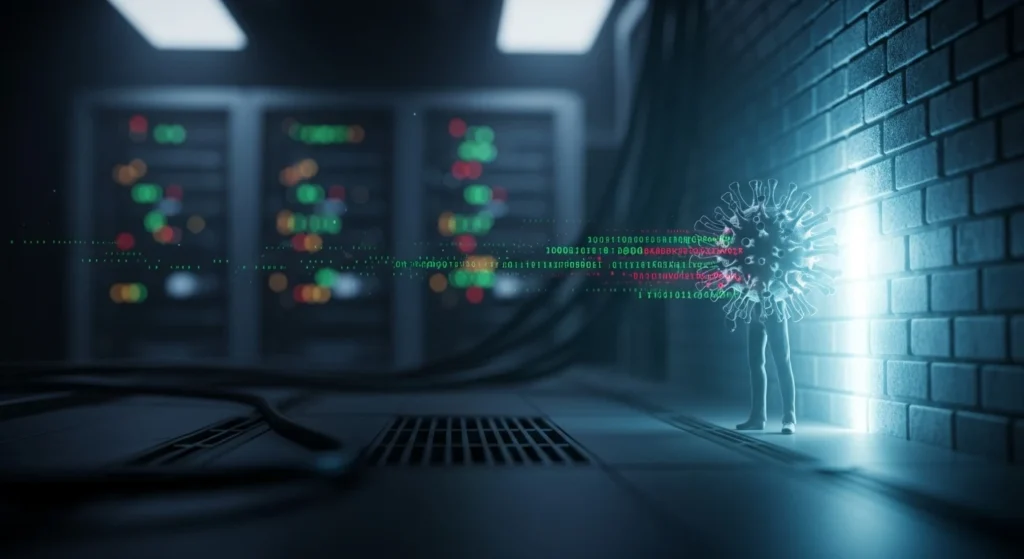
The Virus You Never See Is the Most Dangerous One
There was a time when computer viruses announced themselves.
Your screen froze.
Pop-ups exploded everywhere.
Files vanished overnight.
Today, the most dangerous viruses do none of that.
Modern malware doesn’t want attention.
It wants time.
Time to observe you.
Time to blend in.
Time to quietly do its job without being noticed.
That’s why modern viruses are so hard to detect—not because security tools are weak, but because the threat itself has evolved.
This article breaks down how and why modern viruses stay invisible, what makes them different from old-school malware, and why this matters more than most people realize.
The Old Virus vs. the Modern Virus Mindset
Early viruses were blunt instruments.
They focused on disruption:
- Crashing systems
- Deleting files
- Displaying obvious messages
Their goal was visibility.
Modern viruses operate with a completely different philosophy:
- Silence over chaos
- Persistence over speed
- Data over damage
A virus that gets caught quickly fails.
A virus that goes unnoticed for months succeeds.
Why Signature-Based Detection Is No Longer Enough
Traditional antivirus tools rely heavily on signatures.
A signature is a known pattern—like a fingerprint—used to identify malware.
That worked when:
- Viruses reused the same code
- Malware spread slowly
- Attacks were mass-produced
Modern malware breaks this model completely.
Today’s viruses often:
- Rewrite their own code
- Generate unique versions for each device
- Leave no consistent fingerprint behind
So even if one version is detected, the next one looks entirely different.
Polymorphic Malware: A Virus That Changes Its Face
One of the biggest reasons modern viruses evade detection is polymorphism.
Polymorphic malware:
- Automatically changes its code structure
- Keeps the same behavior but looks different every time
- Evades pattern-matching scanners
Think of it like a criminal who changes their appearance daily but commits the same crime.
To a scanner, it looks new every time—even though it’s the same threat.
Fileless Malware: Nothing to Scan, Nothing to Find
Some modern viruses don’t live in files at all.
They operate:
- In system memory (RAM)
- Inside trusted system processes
- Through built-in operating system tools
This is called fileless malware.
Because:
- There’s no malicious file on disk
- Traditional scans come up clean
- The system appears normal
Yet the virus is active the entire time.
This is one of the most powerful shifts in modern cyber threats.
Living Off the Land: When Malware Uses Legitimate Tools
Modern viruses often use existing system tools instead of malicious software.
They hijack:
- Command-line utilities
- Scripting engines
- System management features
From the outside, everything looks legitimate.
Security tools hesitate to block these actions because they are:
- Built into the system
- Used by administrators
- Necessary for normal operation
This makes detection extremely difficult without behavioral analysis.
Behavior-Based Detection Has Its Own Limits
To counter stealth threats, security tools started focusing on behavior.
But modern malware adapts here too.
Advanced viruses:
- Mimic normal user behavior
- Operate slowly to avoid detection thresholds
- Trigger actions only at specific times
Some wait days—or weeks—before activating.
Others only run when:
- A specific app opens
- The device connects to a certain network
- The user logs into a specific account
Patience is the new weapon.
Why Encryption Helps Malware Stay Hidden
Encryption protects data—but malware uses it too.
Modern viruses often:
- Encrypt their payloads
- Encrypt communication with command servers
- Hide activity inside secure traffic
To security software, encrypted traffic looks legitimate.
Breaking encryption would:
- Violate privacy
- Break secure apps
- Disrupt normal internet use
So malware hides inside the very systems designed to protect users.
The Human Factor: Why We Miss the Signs
Modern viruses don’t slow systems dramatically.
Instead, they:
- Slightly increase background activity
- Use minimal system resources
- Avoid noticeable symptoms
Most people attribute small changes to:
- Aging hardware
- Software updates
- Internet issues
This psychological blind spot is a huge advantage for attackers.
If nothing feels broken, no one goes looking.
Cloud and IoT Devices Expand the Attack Surface
Detection becomes harder as environments become more complex.
Modern systems include:
- Cloud services
- Smart devices
- Mobile endpoints
- Remote access tools
Each connection becomes a potential hiding place.
A virus doesn’t need to live on one device anymore—it can move quietly across ecosystems.
Comparison Table: Old Viruses vs. Modern Viruses
| Feature | Old Viruses | Modern Viruses |
|---|---|---|
| Visibility | Obvious | Nearly invisible |
| Detection | Signature-based | Behavior & context-based |
| File presence | Stored on disk | Often fileless |
| Speed | Immediate damage | Slow, persistent |
| Goal | Disruption | Data, access, control |
| Lifespan | Short | Long-term |
Why This Matters More Than Ever
Modern viruses don’t just steal data.
They:
- Map your behavior
- Observe your routines
- Learn your digital environment
This makes future attacks:
- More precise
- More damaging
- Harder to undo
Detection delays don’t just extend infection—they increase impact.
Common Mistakes That Make Detection Even Harder
Many users unintentionally help malware stay hidden.
Mistakes include:
- Assuming antivirus alone is enough
- Ignoring small performance changes
- Skipping system updates
- Trusting familiar-looking files or links
Modern threats rely on normalcy.
The more routine everything feels, the safer they are.
Practical Steps to Improve Detection Awareness
You don’t need to be paranoid—but you do need to be informed.
Helpful habits include:
- Monitoring unusual login activity
- Watching for subtle network spikes
- Keeping systems and apps updated
- Using layered security, not single tools
Awareness reduces dwell time—the most valuable thing malware has.
Key Takeaways
- Modern viruses prioritize stealth, not damage
- Many don’t leave files behind
- Code constantly changes to evade detection
- Legitimate system tools are often abused
- Encryption helps malware hide in plain sight
- Human assumptions are a major blind spot
Understanding these shifts is the first line of defense.
Frequently Asked Questions
Why doesn’t antivirus catch all modern viruses?
Because many modern threats don’t match known signatures and behave like normal system activity.
Are modern viruses less dangerous since they’re quieter?
No. Quiet threats often cause more damage over time.
Can normal users detect stealth malware?
Sometimes—but it requires attention to subtle changes, not obvious crashes.
Do updates really help against modern malware?
Yes. Updates close behavioral and system-level gaps malware relies on.
Is cloud computing making detection harder?
It increases complexity, which malware often exploits—but it also enables better centralized monitoring.
Conclusion: The Future of Viruses Is Silence
Modern viruses don’t announce themselves.
They observe.
They adapt.
They wait.
Detection today isn’t about spotting obvious threats—it’s about understanding behavior, context, and patterns over time.
The more we learn how modern viruses think, the harder it becomes for them to stay hidden.
And in cybersecurity, visibility is power.
Disclaimer: This article is for general educational purposes only and does not replace professional cybersecurity assessment or tools.

Natalia Lewandowska is a cybersecurity specialist who analyzes real-world cyber attacks, data breaches, and digital security failures. She explains complex threats in clear, practical language so everyday users can understand what really happened—and why it matters.
Pingback: What Malware Actually Does After It Enters Your Device — The Hidden Chain Reaction Most People Never See
Pingback: The Silent Damage Caused by Undetected Malware — What Happens Before You Even Notice
Pingback: Malware vs Virus vs Trojan: The Real Difference Most People Get Completely Wrong