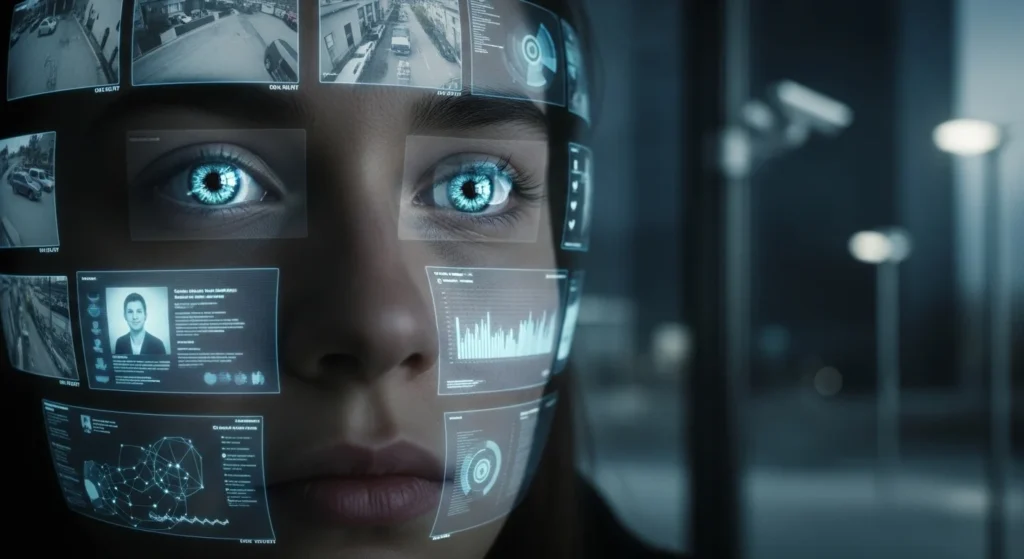
Imagine walking into a store.
A camera tracks your movement.
Your phone pings the Wi-Fi.
Your face may be scanned.
Your location is logged.
And you don’t even pause.
A decade ago, this might have felt unsettling.
Today, it feels… normal.
That’s the biggest transformation happening quietly around us:
surveillance is no longer shocking—it’s becoming routine.
Not because people demanded it.
But because it crept in slowly, wrapped in convenience, safety, and modern life.
Let’s explore why surveillance is becoming normalized, what forces are driving it, and why it matters more than most people realize.
The Shift Happened Gradually—That’s the Point
Surveillance didn’t arrive with an announcement.
It arrived in steps:
- CCTV for security
- Smartphones for connection
- Apps for convenience
- Algorithms for personalization
- Facial recognition for “efficiency”
Each step seemed harmless alone.
But together, they created a world where being watched feels ordinary.
Normalization happens when something repeated often becomes invisible.
That is exactly what has happened with surveillance.
Why Surveillance Feels Less Scary Than It Should
Most people don’t wake up thinking:
“I want to be monitored today.”
Instead, surveillance became acceptable because it was packaged as something else.
Common disguises include:
- Safety
- Convenience
- Customization
- Crime prevention
- National security
- Smart technology
Surveillance rarely presents itself as control.
It presents itself as comfort.
The Convenience Trade-Off Is the Biggest Driver
We live in the age of frictionless living.
People want:
- One-click payments
- Smart home assistants
- Instant navigation
- Personalized recommendations
- Seamless online experiences
But convenience has a hidden cost:
Every time technology becomes easier, tracking becomes deeper.
Real-life example
Google Maps helps you avoid traffic.
But it also constantly collects your location.
The service feels useful.
The surveillance becomes background noise.
Surveillance Is Now Built Into Daily Infrastructure
Surveillance is no longer just a government tool.
It’s part of ordinary systems:
- Airports
- Shopping malls
- Schools
- Workplaces
- Social media platforms
- Smart cities
- Cars and wearable devices
Many modern environments are designed to observe.
The question is no longer:
“Are we being watched?”
It’s:
“How much of life is untracked anymore?”
Social Media Turned Us Into Voluntary Participants
One of the most overlooked reasons surveillance feels normal is this:
People now share their lives publicly by default.
Social platforms trained society to accept visibility.
We post:
- Locations
- Faces
- Relationships
- Habits
- Opinions
- Daily routines
What once would be private is now content.
Surveillance thrives in a culture where exposure feels normal.
The Psychology of “Nothing to Hide”
A common phrase keeps surveillance comfortable:
“If you have nothing to hide, you have nothing to fear.”
But privacy isn’t about hiding wrongdoing.
Privacy is about:
- Freedom of thought
- Protection from misuse
- Control over personal identity
- Space to live without judgment
You lock your door at night not because you’re guilty…
…but because boundaries matter.
Surveillance Became Normal Through Fear and Crisis
Another powerful accelerator is crisis.
When societies feel threatened, they accept more monitoring.
Examples include:
- Terror attacks
- Public unrest
- Cybercrime
- Health emergencies
- Rising misinformation
In fear, people trade liberty for reassurance.
Surveillance becomes a security blanket.
And once introduced, it rarely disappears.
Corporate Surveillance Is Bigger Than Government Surveillance
Most people imagine surveillance as government spying.
But the largest surveillance systems today are corporate.
Big tech companies collect:
- Search histories
- Purchases
- Voice recordings
- Location data
- Viewing behavior
- Social interactions
Why?
Because data fuels profit.
Targeted advertising depends on knowing people better than they know themselves.
Comparison Table: Traditional vs Normalized Surveillance
| Feature | Traditional Surveillance | Normalized Surveillance Today |
|---|---|---|
| Visibility | Obvious and limited | Constant and invisible |
| Controller | Mostly government | Governments + corporations |
| Purpose | Crime/security | Profit + prediction + control |
| Public awareness | High | Low |
| Consent | Rarely asked | Buried in terms of service |
| Scope | Specific targets | Entire populations |
Technology Made Surveillance Passive and Automatic
Older surveillance required effort.
Someone had to watch.
Modern surveillance is automated:
- AI facial recognition
- Predictive policing tools
- Behavioral tracking algorithms
- Voice assistants always listening
- Data brokers selling profiles
Surveillance today doesn’t sleep.
It runs continuously.
And that’s why it feels normal—because no one is holding the camera.
The system is.
Why This Matters Today (And Always)
Normalization is dangerous because it makes people stop questioning.
When surveillance becomes cultural background noise, it can lead to:
- Reduced freedom of expression
- Self-censorship
- Discrimination through algorithms
- Power imbalance
- Abuse without accountability
The real risk isn’t being watched.
The risk is losing control over who watches, why, and what happens next.
Mistakes People Make About Surveillance
Many people misunderstand surveillance in ways that make it easier to accept.
Common mistakes include:
- Assuming only criminals are monitored
- Believing data won’t be misused
- Thinking privacy is outdated
- Trusting companies without transparency
- Ignoring long-term consequences
Surveillance is rarely harmful immediately.
It becomes harmful when systems grow unchecked.
Hidden Tips to Protect Your Privacy Without Extreme Measures
You don’t need to disappear from society.
But you can regain awareness.
Practical steps:
- Review app permissions regularly
- Turn off location tracking when unnecessary
- Use privacy-focused browsers or search engines
- Avoid oversharing personal routines online
- Read before accepting “smart” defaults
- Support transparency laws and ethical tech
Small boundaries create big protection.
Actionable Ways Society Can Respond
Normalization doesn’t mean inevitability.
Surveillance can be balanced with rights.
What helps:
- Stronger privacy legislation
- Transparent AI oversight
- Public accountability
- Digital literacy education
- Ethical technology design
Surveillance is a tool.
The question is whether people control it…
or it controls people.
Key Takeaways
- Surveillance has become normalized through gradual exposure
- Convenience and fear are major drivers
- Social media made visibility feel natural
- Corporate surveillance is now massive and often invisible
- Automated AI systems expanded monitoring beyond imagination
- Privacy isn’t about hiding—it’s about freedom
- Awareness and simple actions can rebuild boundaries
FAQ: Why Surveillance Is Becoming Normalized
1. Why do people accept surveillance so easily today?
Because it is often packaged as safety, convenience, or personalization rather than control.
2. Is surveillance mainly done by governments?
Not anymore. Corporations now run some of the largest surveillance systems through data collection.
3. Does surveillance really impact everyday life?
Yes. It shapes ads, decisions, policing, employment screening, and even online visibility.
4. Is privacy still important if you have nothing to hide?
Absolutely. Privacy is about autonomy, dignity, freedom of thought, and protection from misuse.
5. Can individuals realistically reduce surveillance?
Yes—through digital awareness, smarter settings, and supporting ethical regulation.
Conclusion: The Quiet Normal That Deserves Attention
Surveillance is not arriving.
It is already here.
The real shift is psychological:
What once felt intrusive now feels routine.
What once raised questions now feels invisible.
And that is how normalization works.
The future of privacy will not be decided in one dramatic moment.
It will be decided in everyday acceptance…
Or everyday awareness.
Because the most important question isn’t:
“Are we being watched?”
It’s:
Do we still have the power to choose what kind of society we live in?

Natalia Lewandowska is a cybersecurity specialist who analyzes real-world cyber attacks, data breaches, and digital security failures. She explains complex threats in clear, practical language so everyday users can understand what really happened—and why it matters.