The Suggestion You Didn’t Ask For — But Followed Anyway
You open an app.
The first post feels… right.
The next video keeps you watching.
An ad matches something you were just thinking about.
It feels like coincidence.
But it isn’t.
Modern social platforms don’t wait for you to act.
They anticipate.
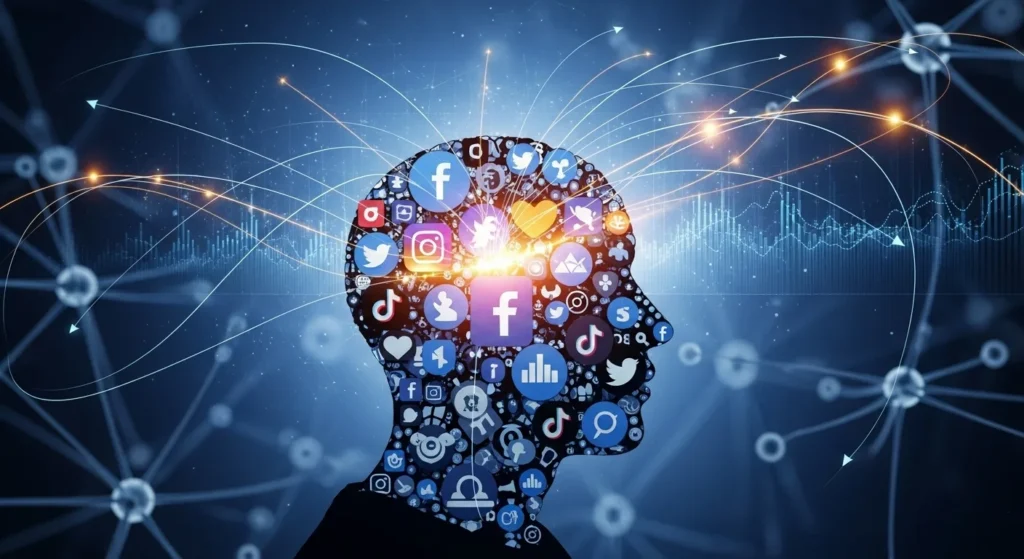
Using thousands of behavioral signals, social media increasingly predicts what you’re likely to do next — before you consciously decide.
Prediction, Not Mind-Reading
Let’s clear something up.
Social media doesn’t read minds.
It reads patterns.
Your behavior leaves digital traces:
- How long you pause on content
- What you scroll past quickly
- When you stop scrolling
- What you almost click — but don’t
These micro-signals are more revealing than likes or comments.
Over time, they form a predictive profile.
Not who you are.
But who you’re likely to be next.
Why Prediction Became the Core of Social Media
Social platforms aren’t built around content.
They’re built around attention.
And attention is easier to capture when you know:
- What keeps someone engaged
- What triggers emotion
- What leads to action
Prediction allows platforms to:
- Show content before interest fades
- Surface ads before intent peaks
- Shape behavior rather than react to it
This shift from reaction to prediction is what changed everything.
The Signals Social Media Uses to Predict You
Prediction doesn’t rely on a single action.
It emerges from combinations.
Key behavioral signals include:
- Scroll speed and rhythm
- Time spent hovering
- Rewatching content
- Sound on vs sound off
- Interaction timing
- Device and usage patterns
Even inaction matters.
What you ignore teaches the system as much as what you engage with.
How Platforms Turn Behavior Into Forecasts
Prediction follows a layered process:
- Data Collection – Every interaction becomes a signal
- Pattern Recognition – Similar users are grouped
- Probability Modeling – Likelihood of future actions is calculated
- Real-Time Testing – Content is adjusted instantly
- Feedback Loop – Your reaction refines the model
This loop runs continuously — often faster than human awareness.
Why Social Media Often Feels “Too Accurate”
It’s not predicting you in isolation.
It’s predicting you as part of a pattern.
Platforms compare your behavior to millions of others who:
- Started the same way
- Engaged similarly
- Made predictable next choices
If people like you tend to watch, buy, share, or follow next — the system bets you will too.
And it’s often right.
Real-World Examples You’ve Probably Experienced
Example 1: Content Before Interest Peaks
You see videos about a topic before you actively search for it.
The system noticed early signals — not intent, but curiosity.
Example 2: Ads Before Decisions Are Final
Ads often appear during consideration, not purchase.
Platforms detect hesitation patterns and intervene early.
This is predictive timing.
The Role of Emotion in Behavior Prediction
Humans aren’t purely rational.
Social media knows this.
Algorithms track emotional cues such as:
- Sudden engagement spikes
- Late-night usage
- Repetitive viewing
- Content escalation
Emotion improves predictability.
When emotion is high, behavior becomes more consistent.
That’s why emotionally charged content travels faster — and predicts better.
Prediction vs Manipulation: Where’s the Line?
This is the uncomfortable part.
Prediction becomes influence when:
- Choices are nudged repeatedly
- Alternatives are quietly hidden
- Exposure becomes asymmetric
The system doesn’t force decisions.
It frames them.
And framing shapes outcomes.
How Major Platforms Do This at Scale
Large platforms like Meta, Google, and TikTok rely heavily on predictive modeling.
Their advantage isn’t just data.
It’s feedback speed.
They can test, learn, and adapt your feed in seconds.
Prediction improves with every interaction.
Social Media Prediction vs Traditional Advertising
| Traditional Advertising | Social Media Prediction |
|---|---|
| Targets demographics | Targets behavior |
| Scheduled campaigns | Real-time adjustment |
| Assumes intent | Infers probability |
| Broad messaging | Personalized sequencing |
| Reactive | Predictive |
This is why modern platforms feel more persuasive than ads ever did.
Why This Matters Today (And Long-Term)
Prediction shapes:
- What information you see
- What opinions feel common
- What choices feel “natural”
Over time, this affects:
- Preferences
- Beliefs
- Habits
- Attention span
The biggest impact isn’t one decision.
It’s repeated micro-influence.
Hidden Ways Prediction Shapes Behavior
1. Narrowing Exposure
You see what you’re likely to agree with — not what challenges you.
2. Accelerating Decisions
Content sequencing shortens deliberation time.
3. Reinforcing Identity
Predictions harden behavioral labels.
You become “someone who likes X.”
And the system treats you accordingly.
Common Mistakes Users Make
- Believing only clicks matter
- Assuming ads are random
- Ignoring passive signals
- Confusing convenience with neutrality
Prediction thrives on assumptions.
Unquestioned behavior feeds it.
How to Reduce Predictive Influence (Actionable Steps)
1. Interrupt Patterns
Change scrolling habits. Pause differently. Explore intentionally.
2. Use Platform Controls
Adjust ad preferences and content settings regularly.
3. Diversify Engagement
Interact outside your usual topics.
4. Be Aware of Emotional Triggers
Strong emotions make behavior more predictable.
Hidden Insight: Prediction Works Best When You’re Tired
Fatigue reduces variability.
Late-night scrolling, stress, and boredom make patterns stronger.
That’s when prediction accuracy peaks.
Not because you’re weak — but because you’re human.
Key Takeaways
- Social media predicts behavior using patterns, not thoughts
- Micro-signals matter more than explicit actions
- Prediction shapes what you see before you decide
- Emotion increases predictability
- Influence accumulates through repetition
- Awareness restores choice
Frequently Asked Questions
1. Can social media really predict my actions?
It predicts likelihood, not certainty — but often with high accuracy.
2. Is this prediction intentional?
Yes. Prediction optimizes engagement and revenue.
3. Does prediction mean loss of free will?
No — but it shapes context, which influences decisions.
4. Can I opt out completely?
Not entirely, but you can reduce its precision.
5. Is prediction getting more advanced?
Yes. Models improve as data and computing power grow.
Conclusion: Prediction Is Quiet — But Powerful
Social media doesn’t control you.
It studies you.
Then it anticipates.
And in doing so, it shapes the environment where choices happen.
The real risk isn’t that platforms know what you’ll do.
It’s that you forget they’re trying to guess.
Because awareness doesn’t stop prediction — but it gives you something far more valuable:
The ability to pause before acting.
Disclaimer: This article is for general informational purposes and reflects common industry practices, not platform-specific or legal guidance.

Natalia Lewandowska is a cybersecurity specialist who analyzes real-world cyber attacks, data breaches, and digital security failures. She explains complex threats in clear, practical language so everyday users can understand what really happened—and why it matters.