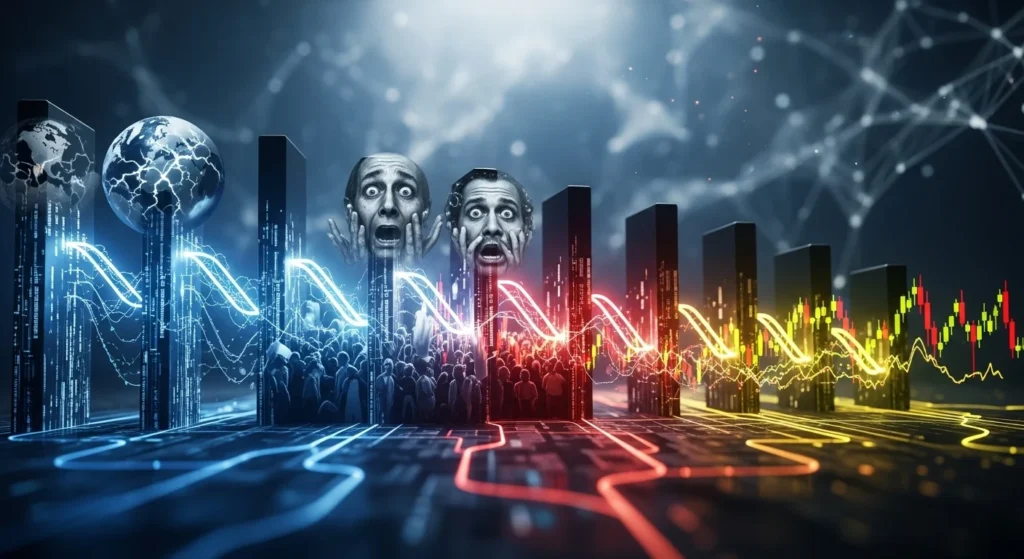
A Message That Looks Harmless—Until It Isn’t
It often starts small.
A forwarded message.
A screenshot from “someone reliable.”
A warning that sounds urgent but vague.
You don’t question it—because it feels familiar. Human. Plausible.
But hours or days later, someone loses money.
A family panics.
A community turns suspicious.
A brand collapses under false claims.
Fake messages rarely look dangerous. That’s precisely why they work.
In today’s hyper-connected world, digital messages don’t stay digital. They jump into real life—shaping decisions, emotions, and actions before facts can catch up.
This article breaks down how fake messages trigger real damage, step by step—and why understanding this invisible chain reaction matters more than ever.
1. Why Fake Messages Feel So Believable
Fake messages don’t rely on intelligence gaps. They rely on human psychology.
They are designed to:
- Mimic everyday language
- Reference trusted platforms or people
- Create urgency (“Act now”, “Share immediately”)
- Trigger emotion before logic
Most misinformation succeeds before the brain switches into critical thinking mode.
Common emotional hooks used:
- Fear (“Your account will be locked”)
- Authority (“Government notice”, “Bank update”)
- Care (“I’m warning you for your safety”)
- Belonging (“Everyone should know this”)
The message doesn’t need proof.
It just needs momentum.
2. The Chain Reaction: How One Fake Message Becomes Real Damage
Fake messages cause harm not instantly—but cumulatively.
Here’s the typical progression:
- Exposure – Someone receives a message from a trusted source
- Acceptance – Emotional reaction overrides verification
- Action – Clicking, sharing, paying, panicking
- Amplification – The message spreads through networks
- Impact – Financial loss, reputational damage, social tension
Each step feels harmless on its own.
Together, they create real-world consequences.
3. Financial Damage: The Most Visible Impact
The most obvious harm from fake messages is money loss.
Examples include:
- Phishing links posing as banks
- Fake investment tips shared in private groups
- Fraud alerts that redirect to scam numbers
- “Refund” or “account verification” texts
A single convincing message can empty savings in minutes.
What makes this worse?
Victims often blame themselves—so incidents go underreported, allowing scams to evolve undetected.
4. Emotional and Psychological Fallout People Rarely Talk About
Not all damage is financial.
Fake messages often cause:
- Anxiety and panic
- Loss of trust in friends or family
- Digital paranoia (“What if everything is fake?”)
- Decision fatigue from constant doubt
Imagine receiving repeated messages about:
- Food contamination
- Health scares
- Crime warnings
- Social threats
Even when false, the stress response is real.
Over time, this erodes confidence, clarity, and emotional safety.
5. Social Damage: When Fake Messages Divide Communities
Fake messages don’t just deceive individuals—they reshape group behavior.
In neighborhoods, schools, workplaces, or online communities, misinformation can:
- Create suspicion between groups
- Trigger moral panic
- Damage reputations without evidence
- Escalate conflicts unnecessarily
A rumor shared in a private group can quietly destroy someone’s credibility—without them ever knowing why.
The damage happens in silence, long before truth gets a chance to speak.
6. Why Social Platforms Accelerate the Damage
Modern platforms are optimized for speed, not verification.
Apps like WhatsApp, Facebook, and Telegram amplify messages because:
- Forwarding is frictionless
- Visual formats feel authoritative
- Private groups create echo chambers
- Algorithms reward engagement, not accuracy
Once a message “looks viral,” people assume it’s true.
Popularity becomes a false signal of credibility.
7. Fake Messages vs. Verified Information (Comparison Table)
| Aspect | Fake Messages | Verified Information |
|---|---|---|
| Emotional Tone | Urgent, alarming, dramatic | Calm, explanatory |
| Source | Vague or unnamed | Clear, traceable |
| Call to Action | “Share now”, “Act fast” | “Read more”, “Confirm” |
| Evidence | Screenshots, hearsay | Data, links, citations |
| Goal | Trigger reaction | Inform decision |
Recognizing these patterns can stop damage before it starts.
8. Why Smart People Still Fall for Fake Messages
Believing misinformation is not a sign of low intelligence.
It’s a sign of:
- Cognitive overload
- Time pressure
- Emotional vulnerability
- Trust in familiar networks
Fake messages succeed because they blend into daily communication.
When everything feels urgent, nothing gets verified.
9. Mistakes That Make Fake Message Damage Worse
Many people unintentionally amplify harm by:
- Sharing “just in case”
- Adding personal credibility (“My friend sent this”)
- Skipping source checks
- Assuming platforms have already filtered lies
One well-meaning forward can multiply damage across hundreds of people.
10. Practical Steps to Break the Damage Cycle
You don’t need advanced tech skills—just intentional habits.
Before believing or sharing:
- Pause for 10 seconds
- Look for an original source
- Check official websites or news outlets
- Notice emotional manipulation
- Ask: Who benefits if I believe this?
If you already shared something false:
- Correct it openly
- Delete the original post
- Share verified clarification
- Normalize changing your mind
Trust grows when accountability becomes visible.
11. Why This Matters Today (And Always Will)
Fake messages aren’t a temporary internet problem.
They are a structural risk of digital communication.
As messaging gets faster and more personal, misinformation becomes:
- Harder to detect
- Faster to spread
- More emotionally convincing
Understanding how fake messages trigger real damage isn’t about fear—it’s about digital maturity.
Those who slow down shape healthier information ecosystems.
Those who don’t become unintentional amplifiers of harm.
Key Takeaways
- Fake messages cause real financial, emotional, and social damage
- Emotional triggers make misinformation believable
- Damage happens through cumulative sharing, not single actions
- Smart people fall for fake messages due to cognitive overload
- Simple verification habits can stop most harm before it spreads
Frequently Asked Questions (FAQ)
1. Are fake messages the same as fake news?
Not always. Fake messages are often private, personal, and harder to track than public fake news.
2. Why do fake messages spread faster than corrections?
Because emotion travels faster than explanation, and urgency beats nuance.
3. Is ignoring fake messages enough?
Ignoring helps, but correcting misinformation reduces harm for others too.
4. Can platforms fully stop fake messages?
No. Private messaging limits oversight. User awareness is essential.
5. What’s the single best habit to avoid damage?
Pause before sharing—speed is misinformation’s biggest ally.
Conclusion: The Power You Don’t Realize You Have
Every message you forward is a vote.
For clarity—or confusion.
For trust—or doubt.
For safety—or harm.
Fake messages don’t create damage alone.
They need participation.
The moment you slow down, question, and verify—you break the chain reaction.
And that’s how real damage quietly stops.
Disclaimer: This article is for general informational awareness only and does not replace professional or legal advice.

Natalia Lewandowska is a cybersecurity specialist who analyzes real-world cyber attacks, data breaches, and digital security failures. She explains complex threats in clear, practical language so everyday users can understand what really happened—and why it matters.