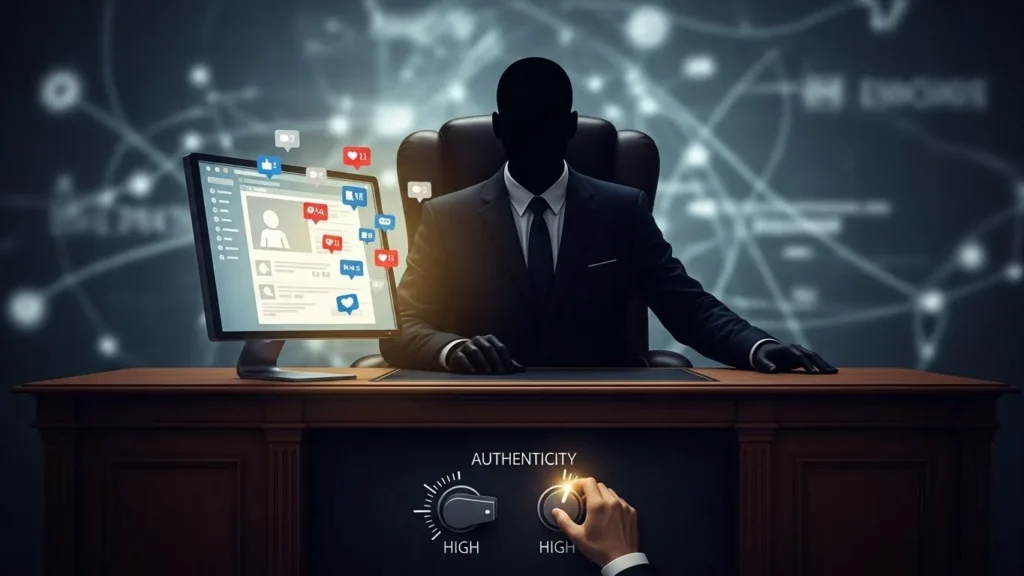
The Message That Instantly Feels “Official”
You receive a message that looks serious.
It has:
- A formal tone
- An official-looking logo
- A confident request
It doesn’t ask.
It instructs.
Your brain reacts before you question it:
“This must be legitimate.”
That reaction isn’t accidental.
It’s called authority bias—and online, it’s one of the most exploited psychological shortcuts we have.
Authority Bias: Why the Brain Loves Power Signals
Humans are social learners.
For survival, we evolved to:
- Follow leaders
- Trust experts
- Obey authority figures
In the physical world, authority had real signals:
- Uniforms
- Credentials
- Reputation
- Accountability
Online, those signals are cheap to copy.
But your brain reacts to them the same way.
What Authority Actually Means (And What It Looks Like Online)
True authority is built on:
- Proven expertise
- Accountability
- Verifiable track record
- Consistent behavior over time
Fake authority imitates the appearance of those traits—without the substance.
Online authority is often reduced to symbols.
And symbols are easy to fake.
Why Fake Authority Works Better Than Fear or Familiarity
Fear makes people rush.
Familiarity makes people relax.
Authority makes people comply.
When authority is present:
- Doubt feels inappropriate
- Questioning feels risky
- Obedience feels correct
That’s why attackers don’t ask politely.
They issue instructions.
Real-Life Example: “This Is IT Support”
An employee receives a message:
“This is IT. We’ve detected a security issue. Reset your password immediately.”
The sender:
- Uses internal language
- Mimics company formatting
- Sounds confident and direct
The request bypasses skepticism.
Why?
Because authority removes the need to decide.
The Most Common Ways Authority Is Faked Online
1. Titles and Roles
“Security Team”
“Compliance Department”
“Account Manager”
Titles trigger obedience—even without proof.
2. Visual Signals
- Logos
- Official colors
- Letterheads
- Professional layouts
Design creates perceived legitimacy.
3. Verification Illusions
- Blue checkmarks
- “Verified” labels
- Sponsored placement
Many users confuse platform verification with trustworthiness.
They are not the same.
4. Technical Language
Jargon creates distance.
When something sounds complex, people assume expertise—and stop questioning.
5. Urgent Authority
Authority + urgency is the strongest combination.
It discourages:
- Verification
- Delay
- Second opinions
Why Authority Shuts Down Critical Thinking
Authority doesn’t just influence decisions.
It outsources responsibility.
Your brain thinks:
“They know better than me.”
That mental handoff saves effort—but increases risk.
Critical thinking is effortful.
Obedience is easy.
Authority Online vs Authority Offline: A Key Difference
| Offline Authority | Online “Authority” |
|---|---|
| Hard to obtain | Easy to imitate |
| Social accountability | Often anonymous |
| Verifiable credentials | Surface-level signals |
| Reputation over time | Instant appearance |
| Consequences for misuse | Low or delayed |
The internet collapses the cost of looking powerful.
The Most Dangerous Mistake People Make
They confuse confidence with credibility.
Fake authority speaks:
- Clearly
- Firmly
- Without hesitation
Real authority often:
- Explains nuance
- Encourages questions
- Accepts verification
Confidence alone proves nothing.
Why This Matters More Than Ever
Digital platforms reward:
- Speed
- Clarity
- Assertiveness
These traits also describe fake authority.
As online interactions replace in-person ones:
- Context disappears
- Verification becomes harder
- Power signals become visual shortcuts
Authority is no longer earned first.
It’s performed.
Hidden Tip: How Real Authority Behaves Differently
True authority usually:
- Welcomes verification
- Provides alternative contact paths
- Avoids pressuring language
- Explains why, not just what
Fake authority avoids scrutiny.
That avoidance is the tell.
How to Spot Fake Authority Without Becoming Distrustful
You don’t need suspicion.
You need process.
Practical, Reliable Checks:
- Verify independently
Never use the contact method provided in the message. - Look for accountability
Who owns this decision if it’s wrong? - Check tone
Commands without context are a red flag. - Slow down
Real authority allows time. - Ask one clarifying question
Fake authority often collapses under it.
What Not to Do (Common Overreactions)
- Don’t assume all authority is fake
- Don’t dismiss real experts
- Don’t rely on appearance alone
- Don’t shame yourself for complying once
Trust is not weakness.
Unquestioned trust is.
The Healthiest Way to Think About Authority Online
Replace:
“They sound official.”
With:
“Can this authority be verified independently?”
That single shift protects without isolating you.
Why Authority Bias Isn’t Going Away
Authority bias isn’t a flaw.
It’s a feature.
It helps societies function.
Online, the goal isn’t to remove authority—
it’s to separate appearance from evidence.
Key Takeaways
- Authority bias makes people comply automatically
- Online authority signals are easy to fake
- Titles, design, and confidence create false trust
- Authority reduces skepticism and verification
- Real authority allows questions
- Independent verification is the safest response
Frequently Asked Questions (FAQs)
1. Why do people trust fake authority online?
Because authority bias triggers obedience before analysis.
2. Are verified badges a sign of real authority?
Not necessarily. They confirm identity—not expertise or intent.
3. Do intelligent people fall for fake authority?
Yes. Authority bypasses intelligence by reducing perceived need to decide.
4. Is questioning authority rude or unsafe?
No. Legitimate authority expects and allows verification.
5. How can I verify authority safely?
Use official websites, known contacts, or secondary channels you control.
Conclusion: Authority Isn’t the Problem — Unchecked Authority Is
Authority helps us navigate complexity.
But online, it’s often a costume.
When you learn to pause—not rebel—
to verify—not dismiss—
you keep trust without surrendering judgment.
That balance is the real skill of digital life.
Disclaimer: This article is for general informational purposes and aims to improve digital awareness, not to replace professional cybersecurity or psychological guidance.

Natalia Lewandowska is a cybersecurity specialist who analyzes real-world cyber attacks, data breaches, and digital security failures. She explains complex threats in clear, practical language so everyday users can understand what really happened—and why it matters.
Pingback: Why Familiar Brands Are Used in Fake Messages — The Trust Shortcut Scammers Rely On