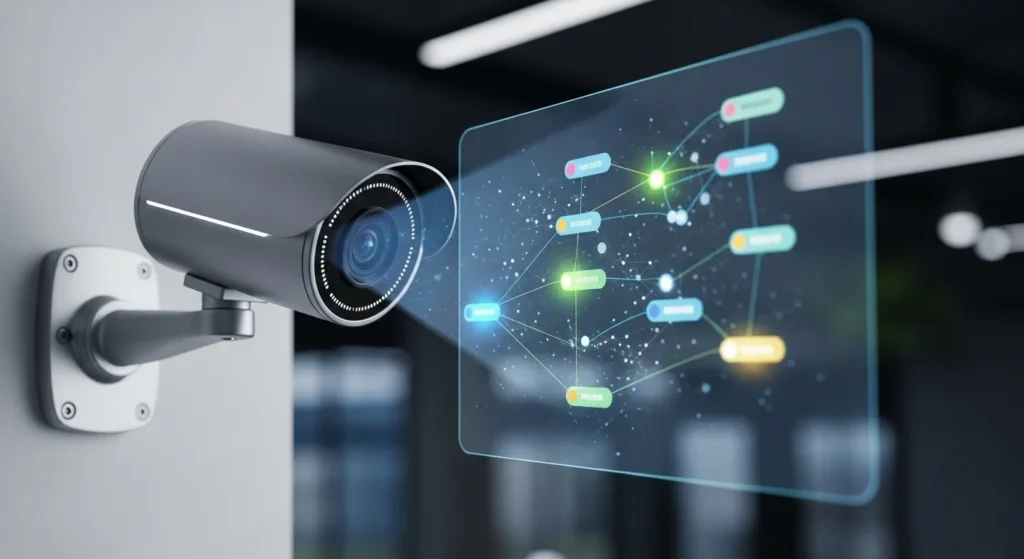
Imagine that you walk into a parking garage late at night.
A camera above the entrance doesn’t just record.
It notices.
It detects unusual movement.
It recognizes a license plate.
It flags behavior that seems suspicious.
It may even alert security automatically.
This is no longer science fiction.
Security cameras are changing roles—from passive recorders to intelligent observers.
And that shift is happening so quietly that most people don’t realize how profound it is.
This isn’t just about more cameras.
It’s about cameras becoming something else entirely:
Smart systems that interpret, predict, and decide.
Let’s explore why this transformation is happening, how it works, and what it means for safety, privacy, and the future of everyday life.
Cameras Used to Watch. Now They “Understand.”
For decades, surveillance cameras did one simple job:
Record footage.
If something happened, humans would review the video later.
But today’s AI-powered security cameras don’t wait.
They process events in real time.
Modern systems can:
- Detect motion instantly
- Identify faces or objects
- Recognize vehicles and license plates
- Interpret human behavior patterns
- Trigger automated responses
The camera is no longer just a witness.
It is becoming an active participant.
That’s why experts call them intelligent observers.
The Rise of AI Surveillance Is Not Accidental
This evolution didn’t happen because cameras got better lenses.
It happened because three powerful forces collided:
- Artificial intelligence
- Cheap cloud computing
- Growing demand for safety and automation
Organizations want systems that don’t just store data…
They want systems that act on it.
A camera that records is useful.
A camera that warns you before something escalates is far more valuable.
What Makes a Security Camera “Intelligent”?
An intelligent camera is defined by more than video quality.
The intelligence comes from analytics.
These cameras are powered by technologies such as:
Computer Vision
AI that helps machines interpret visual information.
Machine Learning
Systems that improve by recognizing patterns over time.
Behavioral Detection
Algorithms trained to detect unusual activity.
Edge Computing
Processing data directly inside the device instead of sending everything to the cloud.
In simple terms:
The camera doesn’t just see. It analyzes.
Real-Life Examples of Intelligent Security Cameras
This technology is already everywhere.
In retail stores
Smart cameras detect shoplifting patterns and alert staff instantly.
In airports
Facial recognition helps verify travelers faster than manual checks.
In smart homes
Doorbell cameras can tell the difference between:
- A delivery person
- A neighbor
- A stranger approaching at night
In public streets
Some systems monitor traffic flow and detect accidents automatically.
The camera is no longer a passive tool.
It’s becoming a decision-making sensor.
Why Intelligent Cameras Are Spreading So Fast
Security cameras are becoming intelligent observers for several major reasons.
1. The World Wants Faster Threat Detection
Traditional CCTV is reactive.
You find out something happened after the fact.
AI surveillance is proactive.
It aims to detect problems as they unfold.
Examples include:
- Intrusion alerts before theft occurs
- Violence detection in crowded areas
- Abandoned object detection in public spaces
In security, speed matters.
And AI provides speed.
2. Humans Can’t Watch Everything
A single large building may have:
- Hundreds of cameras
- Thousands of hours of footage daily
No human team can monitor all of it effectively.
Intelligent systems solve this problem by:
- Filtering footage
- Highlighting unusual events
- Reducing human workload
The camera becomes the first layer of attention.
3. Smart Cities Are Built on Smart Monitoring
Modern cities increasingly rely on automated systems.
Smart surveillance helps manage:
- Traffic congestion
- Public safety
- Emergency response
- Crowd movement
In many cities, cameras are becoming part of urban infrastructure—like streetlights.
That normalization makes intelligent observation feel inevitable.
4. AI Cameras Are Now Affordable
What once required expensive equipment is now widely available.
Thanks to mass production and cloud services:
- Small businesses can afford smart surveillance
- Homeowners can install AI doorbells
- Even schools and offices adopt intelligent systems
This technology is no longer elite.
It’s mainstream.
Comparison Table: Traditional vs Intelligent Security Cameras
| Feature | Traditional Cameras | Intelligent AI Cameras |
|---|---|---|
| Function | Record footage | Analyze events in real time |
| Response | After an incident | During an incident |
| Monitoring | Human-operated | Automated detection |
| Key Strength | Evidence collection | Prevention + prediction |
| Data Use | Stored video only | Video + behavioral analytics |
| Risk Level | Lower privacy impact | Higher privacy concerns |
Why This Matters Today (Beyond Security)
Intelligent cameras are not just improving safety.
They are changing society’s relationship with surveillance.
When cameras begin interpreting behavior, new questions emerge:
- Who defines “suspicious”?
- What happens to false alerts?
- How is the data stored or shared?
- Who controls these systems?
The shift from recording to analyzing is not small.
It is a fundamental change in power.
The Hidden Risks Most People Don’t Consider
AI cameras bring benefits, but also serious concerns.
1. Surveillance Becomes Invisible and Constant
When cameras become smarter, they don’t need humans watching.
That makes monitoring less noticeable—and more permanent.
2. Bias and Misidentification
Facial recognition has faced criticism for misidentifying individuals, especially across demographics.
A camera that “guesses wrong” can create real harm.
3. Data Security and Storage
Footage and biometric data are valuable.
If hacked or misused, they can expose:
- Daily routines
- Private movements
- Sensitive locations
Security systems themselves become targets.
4. The Normalization Effect
When intelligent cameras are everywhere, people begin to accept constant observation as ordinary.
That cultural shift may be the biggest impact of all.
Mistakes to Avoid When Using Smart Security Cameras
Whether you’re a homeowner or business owner, intelligent surveillance requires responsibility.
Avoid these common mistakes:
- Installing systems without understanding privacy laws
- Storing footage insecurely
- Over-relying on AI without human judgment
- Using facial recognition without transparency
- Ignoring false positives and algorithm errors
AI should assist—not replace accountability.
Actionable Tips for Safer, More Ethical Use
If you’re adopting smart security technology, here are practical steps:
1. Choose systems with strong encryption
Look for secure storage and access controls.
2. Limit unnecessary monitoring
Not every space needs constant surveillance.
3. Be transparent with employees or residents
Trust grows through openness.
4. Review footage retention policies
Keep data only as long as needed.
5. Combine AI alerts with human oversight
AI should flag—not judge.
The Future: Cameras That Predict, Not Just Detect
Experts believe the next stage of intelligent surveillance may include:
- Predictive behavior modeling
- Emotion detection (highly controversial)
- Fully automated law enforcement integration
- Surveillance drones with AI tracking
- Seamless biometric monitoring
The camera’s role is expanding from observer…
to interpreter…
to predictor.
That evolution will shape how freedom and security coexist.
Key Takeaways
- Security cameras are evolving into intelligent observers through AI
- Modern cameras analyze behavior, not just record footage
- Demand for faster safety responses drives adoption
- Smart cities and affordable tech accelerate growth
- AI surveillance raises major privacy and ethics concerns
- Responsible use requires transparency, security, and oversight
- The future may involve prediction, not just detection
FAQ: Intelligent Security Cameras Explained
1. What makes a security camera “intelligent”?
AI-powered cameras analyze footage in real time, detecting patterns, faces, objects, and unusual behavior automatically.
2. Are smart security cameras safer than traditional ones?
They can improve safety through faster detection, but they also introduce privacy and data risks.
3. Do intelligent cameras always use facial recognition?
Not always. Many rely on motion, object, or behavioral detection without identifying individuals.
4. Can AI surveillance systems make mistakes?
Yes. False positives and misidentification are real concerns, especially without human oversight.
5. How can individuals protect privacy around smart surveillance?
Support transparency, limit data retention, use secure systems, and stay informed about how surveillance is deployed.
Conclusion: The Camera Is No Longer Just Watching
Security cameras are undergoing a quiet revolution.
They are becoming intelligent observers—systems that interpret and respond, not just record.
This shift offers real benefits:
- Faster protection
- Smarter security
- More efficient monitoring
But it also raises urgent questions about privacy, ethics, and control.
Because the future isn’t just about being recorded…
It’s about being understood, analyzed, and possibly judged by machines.
And that is a transformation society cannot afford to ignore.

Natalia Lewandowska is a cybersecurity specialist who analyzes real-world cyber attacks, data breaches, and digital security failures. She explains complex threats in clear, practical language so everyday users can understand what really happened—and why it matters.