Why This Matters More Than People Realize
You don’t get hacked because you’re careless.
You get hacked because you’re human.
In today’s cyber landscape, attackers aren’t just exploiting software vulnerabilities. They’re exploiting social signals—the quiet cues that tell your brain, “This is safe. Others already trust it.”
That mechanism has a name: social proof.
And it’s one of the most powerful, least-discussed tools in modern cybercrime.
The Subtle Moment When Defenses Drop
Imagine this:
You receive an email saying your account needs verification.
But instead of panic or pressure, it feels… normal.
- The message says “Trusted by millions”
- The interface looks familiar
- The sender seems widely recognized
- There are testimonials, logos, or “verified” language
Your brain relaxes.
That relaxation—not fear—is the real danger.
Social proof doesn’t force you.
It disarms you.
What Social Proof Actually Is (And Why It Works So Well)
Social proof is a psychological shortcut.
When we’re uncertain, we look to others to decide what’s safe or correct.
Offline, this helps us survive.
Online, it’s weaponized.
Common forms of social proof attackers use:
- “Over 50,000 users already updated”
- Fake reviews or testimonials
- Impersonated authority figures or brands
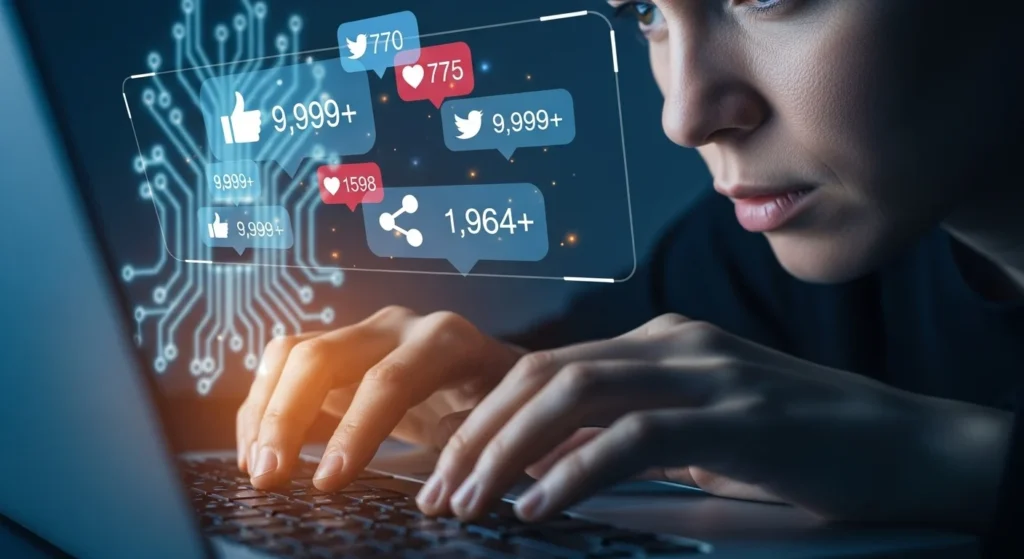
- Social media engagement (likes, comments, retweets)
- Familiar design patterns that mimic real platforms
Your brain interprets popularity as safety—even when logic disagrees.
Why Smart, Educated People Are Often the Best Targets
Here’s a surprising truth:
The more digitally fluent someone is, the more attackers rely on social proof instead of fear.
Why?
Because knowledgeable users don’t fall for obvious threats.
They fall for credible-looking normalcy.
Instead of urgency, attackers use:
- Calm language
- Professional tone
- Familiar workflows
- Collective validation
The message becomes:
“This isn’t risky. Everyone already did it.”
Real-Life Example: The “Internal Approval” Scam
A growing attack pattern targets employees using internal trust signals.
An email appears to come from HR or IT:
“This policy update has already been acknowledged by your team.”
There’s no threat.
No deadline.
No warning.
Just implied consensus.
Victims click—not because they’re rushed, but because they don’t want to be the odd one out.
The Most Common Ways Social Proof Is Used in Cyber Attacks
1. Fake Popularity Signals
Attackers inflate:
- App downloads
- Star ratings
- User counts
- Comments and reactions
Once something looks widely adopted, scrutiny drops.
2. Impersonated Authority + Group Validation
Emails appear to come from:
- Well-known companies
- Team leaders
- Industry platforms
Paired with language like:
- “Most users have already…”
- “Recommended by security teams”
- “Standard practice across the organization”
3. Clone Interfaces and Familiar Design
Your brain trusts what it recognizes.
Attackers copy:
- Login pages
- Dashboards
- Email templates
If it looks right, your brain assumes it is right.
Social Proof vs Fear: Why This Tactic Is Harder to Detect
| Tactic Type | Emotional Trigger | Detection Difficulty | User Reaction |
|---|---|---|---|
| Fear-based phishing | Panic, urgency | Moderate | Suspicion rises |
| Reward-based scams | Greed, excitement | Moderate | Mixed caution |
| Social proof attacks | Comfort, belonging | High | Defenses drop |
Fear makes people alert.
Comfort makes them careless.
That’s why social proof works.
Why Social Proof Attacks Are Increasing
Several modern trends make this tactic especially powerful:
- Remote work reduces face-to-face verification
- Social platforms normalize public validation
- SaaS tools rely heavily on trust cues
- Brand impersonation has become easier
In short: we’re trained to trust what looks widely accepted.
Attackers simply mirror that environment.
Hidden Signs You’re Being Manipulated by Social Proof
Watch for these quiet red flags:
- Claims of popularity without verifiable sources
- “Everyone already did this” language
- Familiar branding with small inconsistencies
- Pressure to conform rather than urgency to act
- Requests that bypass normal verification steps
If a message relies more on who else trusts it than on why it’s legitimate, pause.
Mistakes That Make Social Proof Attacks Successful
Even security-aware users fall into these traps:
- Assuming popularity equals legitimacy
- Trusting visuals over verification
- Skipping checks because it feels routine
- Following group behavior instead of policy
- Believing “internal” automatically means safe
Attackers don’t need your password.
They need your agreement.
How to Defend Against Social Proof Manipulation
1. Replace “Everyone Else Did It” With Verification
Ask:
- Can I independently confirm this?
- Does this follow our usual process?
- Would this still make sense if no one else had done it?
2. Slow Down Comfortable Clicks
Urgency isn’t the only risk.
If something feels too normal, that’s worth questioning.
3. Separate Familiarity From Trust
Recognizable logos and layouts are not security signals.
Verification is.
4. Normalize Questioning in Teams
Attackers thrive where questioning feels awkward.
Make it normal to ask:
“Did this actually come from you?”
Why This Matters Today (And Will Continue to Matter)
Cybersecurity isn’t just about smarter tools.
It’s about understanding how trust is shaped.
As digital spaces become more social, more validated, and more familiar, attackers will keep hiding behind the crowd.
The next generation of cyber defense isn’t louder alarms.
It’s quieter awareness.
Key Takeaways
- Social proof lowers defenses by creating comfort, not fear
- Popularity signals are easily faked online
- Smart users are targeted with subtle trust cues
- Familiar design is not proof of legitimacy
- Slowing down comfortable actions is critical
Frequently Asked Questions (FAQ)
1. Is social proof more dangerous than phishing emails?
In many cases, yes—because it avoids triggering suspicion and feels routine.
2. Can security tools detect social proof attacks?
Some can flag patterns, but human awareness is still the strongest defense.
3. Why don’t training programs focus on this more?
Because it’s harder to teach psychological manipulation than technical threats.
4. Are social media platforms a major risk area?
Yes. Engagement metrics are often used to fake legitimacy.
5. How can organizations reduce this risk?
By encouraging verification culture and reducing blind trust in visual cues.
Conclusion: Trust Is the Real Attack Surface
Cyber attackers don’t need to break your system if they can bypass your judgment.
Social proof works because it feels safe.
And safety is where caution disappears.
The strongest defense today isn’t suspicion of everything.
It’s awareness of why something feels safe in the first place.
Disclaimer: This article is for educational awareness only and does not replace professional cybersecurity guidance or organizational security policies.

Natalia Lewandowska is a cybersecurity specialist who analyzes real-world cyber attacks, data breaches, and digital security failures. She explains complex threats in clear, practical language so everyday users can understand what really happened—and why it matters.