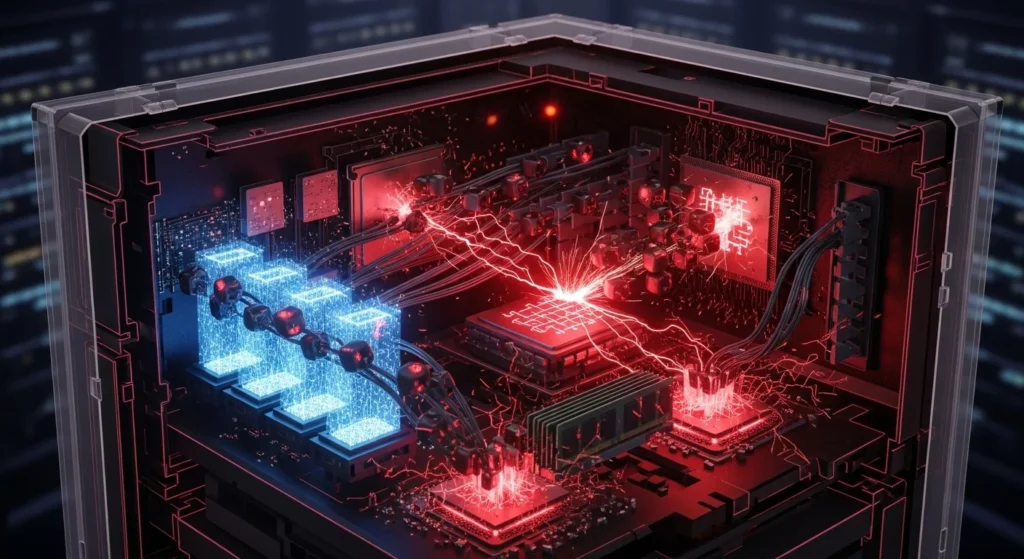
The Attack Starts Long Before the Warning
When people think of a cyber attack, they imagine a dramatic moment.
A screen locks.
Files disappear.
An alert flashes.
But by the time you see something is wrong, the attack is already deep inside your system.
Cyber attacks don’t begin with damage.
They begin with observation.
This article walks you through what actually happens inside a system during a cyber attack, step by step—what changes, what stays invisible, and why most attacks succeed long before anyone notices.
Stage One: Initial Access Happens Quietly
The first stage of a cyber attack is rarely violent.
It’s subtle.
Access usually comes from:
- A phishing email
- A compromised password
- An exposed service or outdated software
At this point, nothing breaks.
The system doesn’t panic.
Security tools often remain silent.
From the system’s perspective, a normal user just logged in.
This quiet entry is what makes modern attacks so effective.
Stage Two: The System Is Studied, Not Attacked
Once inside, attackers don’t rush.
They observe.
Internally, the system is being:
- Mapped for connected devices
- Checked for privilege levels
- Scanned for valuable data
Processes run in the background, blending with legitimate activity.
This phase can last minutes—or months.
The goal isn’t damage yet.
The goal is understanding the environment.
Stage Three: Privileges Are Quietly Expanded
Most attacks don’t start with full control.
They earn it.
Attackers look for ways to:
- Elevate permissions
- Access admin accounts
- Reuse stored credentials
Inside the system, this looks like:
- New processes requesting higher access
- System tools being used more frequently
- Authentication patterns changing slightly
Still, nothing obvious breaks.
That’s the danger.
Stage Four: Persistence Is Established
Attackers don’t want temporary access.
They want reliable access.
At this stage, the system is modified to:
- Restart malicious processes automatically
- Hide activity inside legitimate services
- Maintain access even after reboots
This persistence layer is often invisible to users.
Even if the initial entry point is closed, the attack survives.
This is where many cleanups fail.
Stage Five: Lateral Movement Begins
Modern systems are interconnected.
Attackers take advantage of that.
From one system, they:
- Access shared folders
- Connect to nearby machines
- Move across cloud or network resources
Internally, the system logs show:
- Normal login attempts
- Legitimate connections
- Approved access paths
The attack spreads inside trust relationships.
No alarms.
No forced entry.
Stage Six: Data Is Identified and Staged
Before anything is stolen or encrypted, attackers choose what matters.
Inside the system, they:
- Search for sensitive files
- Locate databases
- Identify backups and recovery options
Often, data is copied to temporary locations.
This staging allows attackers to:
- Move quickly later
- Reduce mistakes
- Maximize leverage
The system still appears functional.
Stage Seven: Command and Control Communication
At this point, the system is no longer acting alone.
It’s listening.
Attackers establish secure communication channels to:
- Send instructions
- Receive updates
- Coordinate timing
These communications are often:
- Encrypted
- Hidden inside normal traffic
- Indistinguishable from legitimate connections
Blocking them without context is extremely difficult.
Stage Eight: The Trigger Is Pulled
Only now does the visible attack begin.
This might look like:
- Files being encrypted
- Systems being locked
- Data being exfiltrated
But internally, the system is reacting to instructions that were prepared long ago.
The speed feels sudden because all preparation is complete.
The attack doesn’t escalate—it executes.
Comparison Table: Normal System vs. Compromised System
| System Behavior | Normal Operation | During a Cyber Attack |
|---|---|---|
| Logins | Predictable | Slightly irregular |
| Processes | User-initiated | Mixed with hidden tasks |
| Permissions | Stable | Gradually expanding |
| Network traffic | Consistent | Subtle anomalies |
| System alerts | Clear | Often delayed |
| User experience | Normal | Appears normal until late |
Why This Matters Today
Cyber attacks don’t rely on panic.
They rely on patience.
The longer attackers stay invisible, the more damage they can cause—and the harder recovery becomes.
Understanding what happens inside a system changes how you think about security:
- It’s not about reacting faster
- It’s about noticing earlier
Awareness is a defensive advantage.
Common Mistakes That Let Attacks Progress
Many systems fail not because of weak tools—but because of assumptions.
Common mistakes include:
- Trusting that silence means safety
- Ignoring small behavior changes
- Assuming one device equals one breach
- Treating alerts as the start of the attack
In reality, alerts usually appear near the end.
Actionable Ways to Interrupt the Attack Chain
You can’t stop every intrusion—but you can shorten its lifespan.
Effective steps include:
- Monitoring unusual login behavior
- Limiting administrative privileges
- Segmenting systems and networks
- Reviewing persistence mechanisms regularly
The goal isn’t perfection.
It’s early disruption.
Key Takeaways
- Cyber attacks unfold in quiet stages
- Initial access is often invisible
- Systems are studied before being damaged
- Privileges and persistence come first
- Lateral movement spreads impact
- The visible attack is usually the final step
Understanding the sequence is the strongest defense.
Frequently Asked Questions
Does a cyber attack always cause immediate damage?
No. Most damage happens long after access is gained.
Can a system look normal while under attack?
Yes. That’s common in modern attacks.
Are alerts reliable indicators of attack start?
No. They often signal the end of preparation.
Do attacks always involve malware?
Not always. Many use legitimate system tools.
Is user error always the cause?
No. Shared systems and inherited trust are often exploited.
Conclusion: The Real Attack Is the One You Don’t See
Cyber attacks don’t announce themselves.
They settle in.
They observe.
They prepare.
By the time damage appears, the system has already been compromised for far longer than most people realize.
Understanding what happens inside a system during a cyber attack doesn’t create fear—it creates clarity.
And clarity is what turns reaction into prevention.
Disclaimer: This article is for general educational purposes only and does not replace professional cybersecurity evaluation or services.

Natalia Lewandowska is a cybersecurity specialist who analyzes real-world cyber attacks, data breaches, and digital security failures. She explains complex threats in clear, practical language so everyday users can understand what really happened—and why it matters.