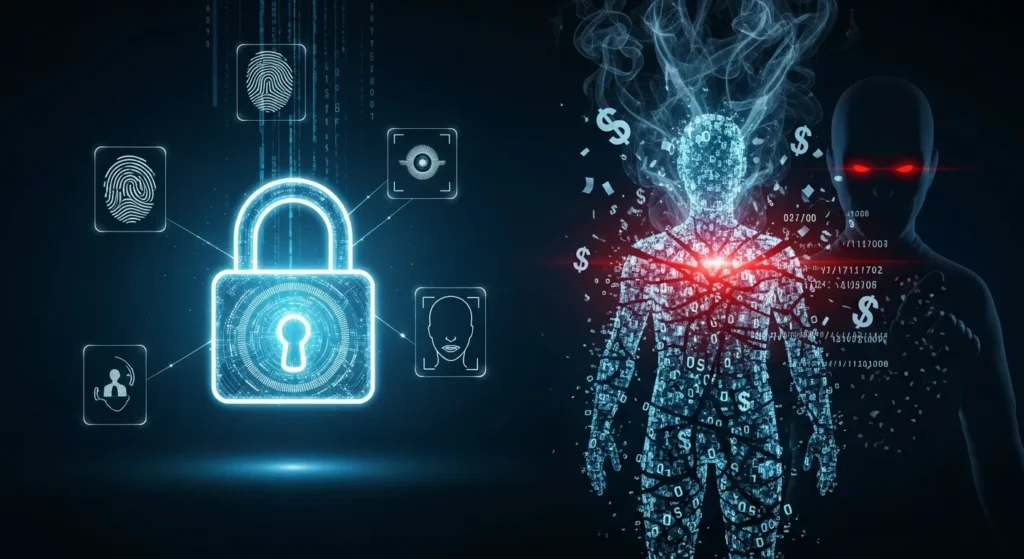
The Paradox Nobody Warned You About
For years, the story around identity theft was simple.
Stronger security would mean:
- Fewer breaches
- Less fraud
- Better protection
And in many ways, that’s true.
But there’s a paradox quietly taking shape.
Identity theft is becoming harder to execute—yet far more damaging when it succeeds.
This isn’t fear-mongering.
It’s a structural shift in how identity works today.
As digital identity, biometrics, and automated trust systems replace passwords and paperwork, the frequency of identity theft may drop—but the impact is rising sharply.
This article explains why that’s happening, what’s changing behind the scenes, and how individuals can protect themselves in a world where a single identity failure can echo for years.
Why Identity Theft Is Actually Getting Harder
On the surface, things look safer than ever.
Most major platforms now use:
- Multi-factor authentication
- Behavioral monitoring
- Biometric verification
- Real-time fraud detection
Basic attacks—like guessing passwords or stealing credit card numbers—are far less effective than they once were.
Security systems are better at:
- Spotting anomalies
- Blocking suspicious logins
- Flagging unusual transactions
In short, casual identity theft is declining.
But this improvement has an unintended side effect.
The Hidden Shift: From Weak Links to High-Value Targets
As systems get stronger, attackers adapt.
Instead of:
- Stealing thousands of low-quality identities
They now focus on:
- Fewer, higher-value identities
Modern identity theft is surgical, not random.
Attackers aim for identities that unlock:
- Financial access
- Healthcare records
- Employment credentials
- Travel permissions
The effort is higher—but so is the payoff.
This concentrates risk rather than eliminating it.
Why This Matters Today (Even If You’ve Never Been a Victim)
Identity today is no longer fragmented.
It’s connected.
Your digital identity links:
- Devices
- Accounts
- Credentials
- Permissions
That means one successful compromise can trigger a chain reaction.
Instead of one fraudulent transaction, victims face:
- Account lockouts
- Credit freezes
- Service denials
- Long recovery timelines
The system works beautifully—until it doesn’t.
The Biggest Change: Identity Is Becoming Permanent
In the past, stolen identity data was mostly replaceable.
You could:
- Change a password
- Cancel a card
- Reissue a document
Today’s identity systems rely more on:
- Biometrics
- Behavioral patterns
- Long-term reputation scores
These are not easily reset.
If compromised:
- You can’t change your face
- You can’t replace behavioral history
- You can’t quickly rebuild trust scores
This permanence is what makes modern identity theft so damaging.
Identity Theft: Then vs Now
| Aspect | Traditional Identity Theft | Modern Identity Theft |
|---|---|---|
| Difficulty | Low | High |
| Scale | Mass, random | Targeted, selective |
| Data stolen | Passwords, cards | Biometrics, credentials |
| Recovery | Fast | Slow and complex |
| Long-term impact | Limited | Persistent |
| Emotional toll | Moderate | High |
Security improvements didn’t eliminate risk—they concentrated it.
Real-Life Scenarios That Show the New Damage
Scenario 1: Account De-Platforming
When identity verification fails, platforms may suspend access automatically.
Victims aren’t just defrauded—they’re locked out of digital life.
Scenario 2: Financial Identity Freeze
Modern fraud systems can block:
- Bank access
- Loan approvals
- Payment services
Even after fraud is resolved, reputational scars may remain.
Scenario 3: Credential Cascades
One compromised identity can invalidate:
- Work access
- Travel privileges
- Healthcare portals
Recovery isn’t one step—it’s many.
Why Automation Raises the Stakes
Automation improves efficiency—but removes nuance.
Identity decisions are increasingly made by systems that:
- Don’t explain themselves
- Don’t offer immediate appeals
- Err on the side of denial
When identity theft triggers automated defenses:
- Legitimate users are affected instantly
- Resolution takes time
- Human review comes later
Security becomes strict—but unforgiving.
Common Mistakes People Make About Identity Theft Today
1. Believing “It Won’t Happen to Me”
Targeted attacks focus on value, not visibility.
Professionals, frequent travelers, remote workers, and digitally active users are often more exposed.
2. Assuming Strong Security Equals Zero Risk
Strong systems reduce frequency—but amplify impact when breached.
3. Ignoring Identity Recovery Planning
Most people prepare to prevent theft, not recover from it.
That’s a critical gap.
Hidden Tips to Reduce Damage (Not Just Risk)
Here’s how to protect yourself for the reality ahead:
- Separate high-value identities from casual services
- Avoid using one identity across finance, work, and social platforms
- Enable alerts for identity changes—not just transactions
- Maintain updated recovery contacts and documents
- Periodically test account recovery paths
The goal isn’t perfect security—it’s resilient recovery.
Why Fewer Attacks Doesn’t Mean Less Harm
Statistics may show declining fraud attempts.
But for victims, outcomes are often worse.
Because modern identity systems are:
- Integrated
- Persistent
- Reputation-based
A single compromise can:
- Take months to resolve
- Require extensive verification
- Affect future access
Identity theft is shifting from financial loss to life disruption.
What the Future of Identity Theft Looks Like
Going forward, expect:
- Fewer attacks
- Smarter attackers
- Longer recovery times
- Higher emotional and financial toll
At the same time, better systems are emerging:
- Layered identity models
- User-controlled credentials
- Context-aware verification
- Human-in-the-loop recovery
The future isn’t hopeless—but it demands awareness.
Key Takeaways
- Identity theft is becoming harder—but more severe
- Stronger security concentrates risk instead of eliminating it
- Modern identities are permanent and interconnected
- Recovery matters as much as prevention
- Preparation reduces long-term damage
- Awareness is now a form of protection
Frequently Asked Questions (FAQ)
1. Is identity theft actually declining?
Basic attacks are declining, but targeted, high-impact theft is rising.
2. Why does recovery take longer now?
Because identity systems rely on interconnected data and automated decisions.
3. Are biometrics making identity theft worse?
They reduce some risks but increase damage if compromised.
4. What’s the biggest mistake people make?
Assuming prevention alone is enough.
5. How can individuals prepare better?
By separating identities, enabling alerts, and planning recovery steps in advance.
Conclusion: Stronger Locks, Higher Stakes
Security has improved.
But identity has changed.
It’s no longer something you can easily replace—it’s something systems remember.
That’s why identity theft is becoming a paradox:
- Harder to pull off
- Far more painful when it succeeds
The safest path forward isn’t fear.
It’s understanding how identity now works—and preparing for the moment systems get it wrong.
Because in the modern world, resilience matters more than perfection.
Disclaimer: This article is for general informational purposes only and does not replace professional cybersecurity or financial guidance.

Natalia Lewandowska is a cybersecurity specialist who analyzes real-world cyber attacks, data breaches, and digital security failures. She explains complex threats in clear, practical language so everyday users can understand what really happened—and why it matters.