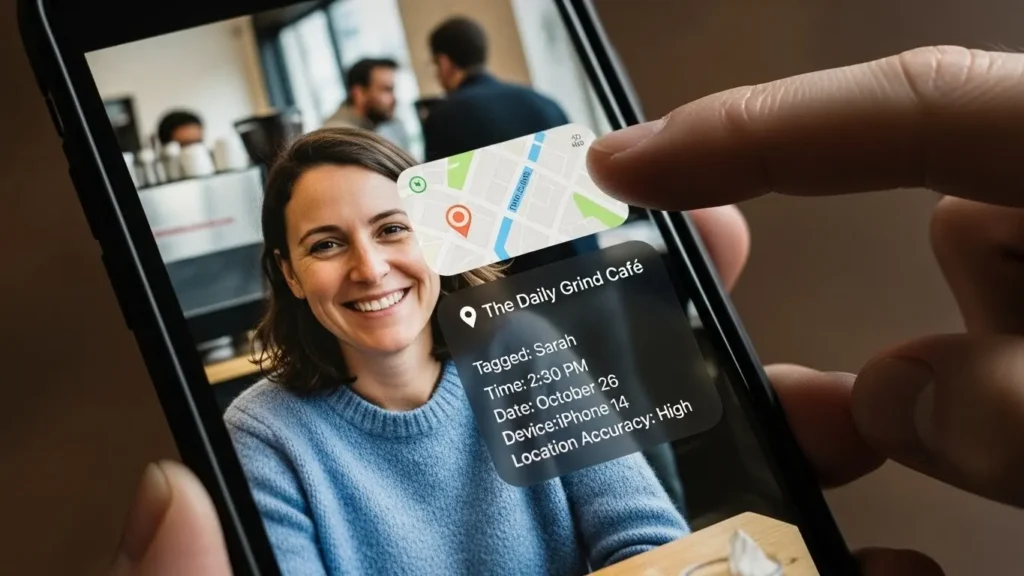
The Tag You Didn’t Think Twice About
It felt harmless.
A friend tagged you in a group photo.
A family member shared a memory.
You smiled, maybe reshared it, and moved on.
But that single tag did more than notify your friends.
It connected your face, name, location, social circle, and moment in time—permanently.
Here’s the truth most users overlook:
Tagging photos isn’t just about memories. It’s about data.
And data, once connected, is hard to disconnect.
This article breaks down why photo tagging is a real privacy risk, how it quietly builds detailed profiles about you, and what you can do—practically and calmly—to reduce exposure.
What Does Photo Tagging Actually Do?
When someone tags you in a photo, the platform doesn’t just attach your name.
It links:
- Your identity to a face
- Your face to a timestamp
- Your presence to a location
- Your relationship to other people in the photo
- Your behavior to visual evidence
In data terms, a tag creates context-rich identity confirmation.
That’s far more valuable than a text post.
Why Photos Are More Revealing Than Words
Words are interpretive.
Photos are concrete.
A tagged photo can reveal:
- Where you were
- Who you were with
- What you were doing
- How often you appear in certain places
- Lifestyle indicators (events, travel, habits)
Even without captions, images speak loudly.
And tags make sure the system knows exactly who that image belongs to.
Facial Recognition Makes Tagging Even Riskier
Modern platforms increasingly rely on facial recognition systems.
Once your face is tagged enough times, systems can:
- Recognize you across photos
- Identify you even without tags
- Suggest tags automatically
- Link your appearance over years
- Track visual changes over time
At that point, tagging becomes optional for humans—but not for machines.
Your face becomes a persistent identifier.
Real-Life Example: The Location Trail You Didn’t Mean to Share
Imagine someone tagged in:
- Office celebrations
- Weekend outings
- Gym selfies
- Family events
- Travel photos
Individually, harmless.
Together, they reveal:
- Work schedule patterns
- Favorite hangout spots
- Travel frequency
- Social habits
- Routine locations
No check-ins needed.
The visual trail tells the story.
Why Tags Amplify Data Aggregation
A photo alone is one data point.
A tagged photo connects multiple datasets:
- Identity
- Face data
- Location data
- Social graph
- Timeline behavior
This aggregation allows platforms to:
- Strengthen user profiles
- Improve ad targeting
- Predict behavior
- Map relationships visually
The tag is the glue.
Comparison Table: Tagged vs Untagged Photos
| Aspect | Tagged Photo | Untagged Photo |
|---|---|---|
| Identity link | Explicit | Uncertain |
| Facial data | Confirmed | Partial |
| Searchability | High | Lower |
| Profile impact | Strong | Limited |
| Long-term risk | Higher | Moderate |
The difference isn’t visibility—it’s certainty.
Why You Don’t Control Most Tags
Here’s a hard truth:
You don’t tag yourself most of the time.
Others do.
Friends, relatives, colleagues—even strangers.
Even if you’re careful:
- Someone else posts
- Someone else tags
- Someone else reshapes your exposure
Privacy becomes collective, not individual.
That’s why awareness matters beyond your own behavior.
Why This Matters Today (And Going Forward)
Photo tagging affects:
- Personal safety
- Professional reputation
- Data profiling
- Facial recognition databases
- Future anonymity
As image analysis improves, visual data becomes more powerful—not less.
What feels casual today may feel invasive tomorrow.
Hidden Tip: Tags Affect People Who Aren’t Even Online
Even if you:
- Rarely post
- Don’t share photos
- Keep a low profile
Being tagged by others still:
- Builds facial datasets
- Links your identity socially
- Creates searchable associations
You can be digitally visible without being digitally active.
Common Mistakes People Make
❌ Assuming tags are just notifications
❌ Ignoring old tagged photos
❌ Forgetting about auto-tag suggestions
❌ Believing “friends only” equals safe
❌ Overlooking group photos
Most exposure happens unintentionally.
Actionable Steps to Reduce Photo Tagging Risk
You don’t need to disappear.
You need control layers.
Practical steps:
- Review tag approval settings
- Remove tags from sensitive photos
- Disable auto-tag suggestions
- Politely ask friends before tagging
- Audit old tagged photos periodically
- Be mindful of high-risk environments (work, travel, home)
Small steps significantly reduce risk.
Is Tagging Always Bad?
No.
Tagging can:
- Strengthen connections
- Preserve memories
- Improve discoverability
The risk comes from unexamined tagging, not tagging itself.
Intentional use matters.
Why Visual Privacy Is Harder Than Text Privacy
You can:
- Edit a post
- Delete a comment
- Change your bio
But:
- Faces are immutable
- Photos spread easily
- Context is often lost
- Copies multiply quickly
Visual data is harder to control—and easier to misuse.
Key Takeaways
- Photo tagging links identity, face, and context
- Tagged images are stronger data signals than text
- Facial recognition increases long-term risk
- Others often control your tagging exposure
- Awareness and settings dramatically reduce risk
Frequently Asked Questions (FAQ)
1. Are tagged photos more risky than regular posts?
Yes. They connect identity to visual and contextual data.
2. Does removing a tag delete the photo?
No. It removes identity linkage, not the image itself.
3. Can private accounts prevent tagging risks?
They reduce exposure, but tags can still exist within networks.
4. Should I ask friends not to tag me?
Yes—clear boundaries are reasonable and effective.
5. Is this about fear or control?
Control. Understanding leads to better choices, not panic.
Conclusion: A Tag Is a Choice—Even When You Didn’t Make It
Photo tagging feels social.
Friendly.
Casual.
Normal.
But behind the scenes, it’s a powerful data connector.
Understanding that doesn’t mean stopping memories—it means protecting your future self while enjoying the present.
Because privacy isn’t about hiding.
It’s about choosing what connects to you—and what doesn’t.
Disclaimer: This article is for general informational purposes and reflects common patterns in social media use and digital privacy.

Natalia Lewandowska is a cybersecurity specialist who analyzes real-world cyber attacks, data breaches, and digital security failures. She explains complex threats in clear, practical language so everyday users can understand what really happened—and why it matters.
Pingback: The Silent Data Social Platforms Collect From Non-Users — What They Know About You Without an Account