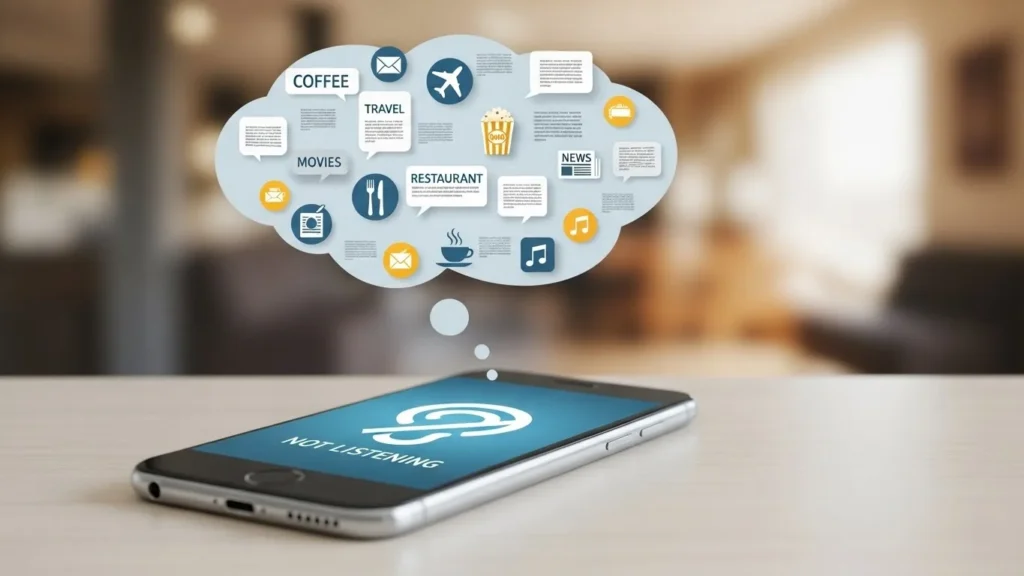
The moment that makes everyone suspicious
You talk about a product with a friend.
Later, an ad for it appears on your phone.
No search.
No typing.
Just conversation.
The reaction is instant:
“My phone is listening to me.”
It feels obvious.
It feels personal.
And it feels unsettling.
But here’s the truth most people don’t expect:
Your phone usually isn’t listening in the way you think.
It doesn’t need to.
What it does instead is often more powerful.
Why the “Phone Is Listening” Idea Feels So Convincing
The idea sticks because:
- The timing feels uncanny
- The ads feel too accurate
- The explanation feels simple
Listening is easy to imagine.
Inference is not.
Our brains prefer a clear villain over an invisible system.
But modern phones operate on prediction, not eavesdropping.
And prediction works shockingly well.
The Real Question Isn’t “Is My Phone Listening?”
The real question is:
How does my phone know so much without recording me?
The answer lies in signals—hundreds of them—working together quietly.
Your phone doesn’t need your words
when it already understands your patterns.
1. Behavioral Clues Speak Louder Than Words
Every app interaction sends signals:
- What you scroll past
- What you pause on
- What you ignore
- What time you’re active
If you:
- Browse fitness content
- Watch workout videos
- Open food delivery apps late at night
You don’t need to say “I want to get fit.”
The system already knows.
2. Search “Echoes” After Conversations
Many people talk before they search.
You might:
- Mention a holiday destination
- Later Google hotel prices
- Then watch travel reels
From the system’s perspective:
- The search confirms the interest
- The content reinforces it
- Ads simply follow the pattern
The conversation feels like the cause.
The digital trail is the proof.
3. Location + Timing Creates Context
Phones constantly know:
- Where you are
- When you’re there
- How often you return
If you visit:
- A car showroom
- A baby store
- A clinic
Ads related to those topics may appear.
No listening required.
Just context awareness.
4. Microphone Access Is Tightly Restricted (And Audited)
Here’s an important reality check.
On modern phones:
- Microphone access is permission-based
- Apps can’t secretly activate it freely
- Operating systems flag misuse
Both Google and Apple publicly state that covert audio recording for ads would violate platform rules and attract massive regulatory penalties.
Is misuse impossible? No.
Is it widespread? Extremely unlikely.
The risk-to-reward ratio simply doesn’t make sense.
5. “Shadow Data” From Other People
This part surprises many users.
Your data doesn’t exist alone.
If:
- Your contacts search something
- People in your household browse similar topics
- Friends interact with certain ads
Systems can infer shared interests.
This is called correlated behavior, not surveillance.
You didn’t say anything.
But your network did.
6. Smart Assistants Create Confusion
Voice assistants do listen—for wake words.
But:
- Audio processing is mostly local
- Accidental activations are logged and visible
- Users can review and delete recordings
These systems are limited and transparent compared to ad-tech inference systems.
The myth spreads because people confuse:
- Voice commands
- With advertising intelligence
They’re not the same.
7. Why Ads Feel Personal Right After Conversations
Timing creates illusion.
When you talk about something:
- Your awareness increases
- You notice related content more
- Your brain connects the dots
This is called frequency illusion.
The ad was likely going to appear anyway.
The conversation simply made it noticeable.
Listening vs Inference: A Simple Comparison
| Method | How It Works | Used for Ads |
|---|---|---|
| Audio Recording | Captures conversations | ❌ Extremely rare |
| Voice Assistants | Wake-word based | ❌ |
| Behavioral Inference | Uses actions & patterns | ✅ Common |
| Location Context | Uses movement & visits | ✅ Common |
| Network Signals | Uses group behavior | ✅ Common |
Inference wins because it’s:
- Cheaper
- Legal
- Scalable
- More accurate over time
Why This Matters Today (Even Without Fear)
The danger isn’t being recorded.
The danger is being predictable.
When systems can anticipate:
- What you want
- When you’re vulnerable
- What influences you
They don’t need your words.
They already understand your behavior.
This shapes:
- What you see
- What you buy
- What you believe is “your idea”
Common Mistakes People Make
- Covering microphones while ignoring app behavior
- Deleting voice history but not activity data
- Trusting “mute” over permission review
- Thinking privacy = silence
Privacy today is about patterns, not sound.
What You Can Actually Do (That Helps)
You don’t need extreme measures.
Just smarter ones.
Practical steps:
- Review app permissions regularly
- Limit background activity
- Reduce ad personalization settings
- Use browsers with tracking protection
- Be mindful of what you interact with
Both Android and iOS provide dashboards showing recent microphone access—check them.
Hidden Tip Most People Miss
If an app doesn’t need sound to function:
- It doesn’t need microphone access
- Revoke it confidently
Apps rarely break when you say no.
Why Fear Is the Wrong Response
Fear leads to:
- Misinformation
- Bad decisions
- Distrust without clarity
Understanding leads to:
- Control
- Better habits
- Healthier tech use
Your phone isn’t spying on you.
It’s studying patterns.
Key Takeaways
- Phones don’t need to record conversations to understand you
- Behavioral inference is more powerful than listening
- Ads feel personal due to timing and awareness
- Permissions and habits matter more than microphones
- Awareness restores control
Frequently Asked Questions
Can apps secretly record me?
On modern systems, sustained secret recording is highly restricted and risky for developers.
Why do ads match conversations so well?
Because behavior, timing, and context often align after conversations.
Does disabling the microphone stop tracking?
It stops audio input—but not behavioral inference.
Are voice assistants always listening?
They listen for wake words, mostly processed locally.
Should I be worried?
Concern is healthy. Panic is unnecessary.
A Calm, Honest Conclusion
Your phone isn’t eavesdropping on your life.
It’s observing patterns you didn’t realize you were creating.
When you understand that difference,
you stop feeling watched—and start feeling informed.
And in the digital world, clarity is the real power.
Disclaimer: This article is for general educational awareness and reflects common smartphone and advertising practices that may vary by device, platform, and user settings.

Natalia Lewandowska is a cybersecurity specialist who analyzes real-world cyber attacks, data breaches, and digital security failures. She explains complex threats in clear, practical language so everyday users can understand what really happened—and why it matters.